Bitcoin for Indian Investors: A Traditional Investor's Guide
Curious about Bitcoin and crypto trading? This guide helps traditional Indian investors understand digital assets, offering practical steps to integrate crypto into their portfolios.
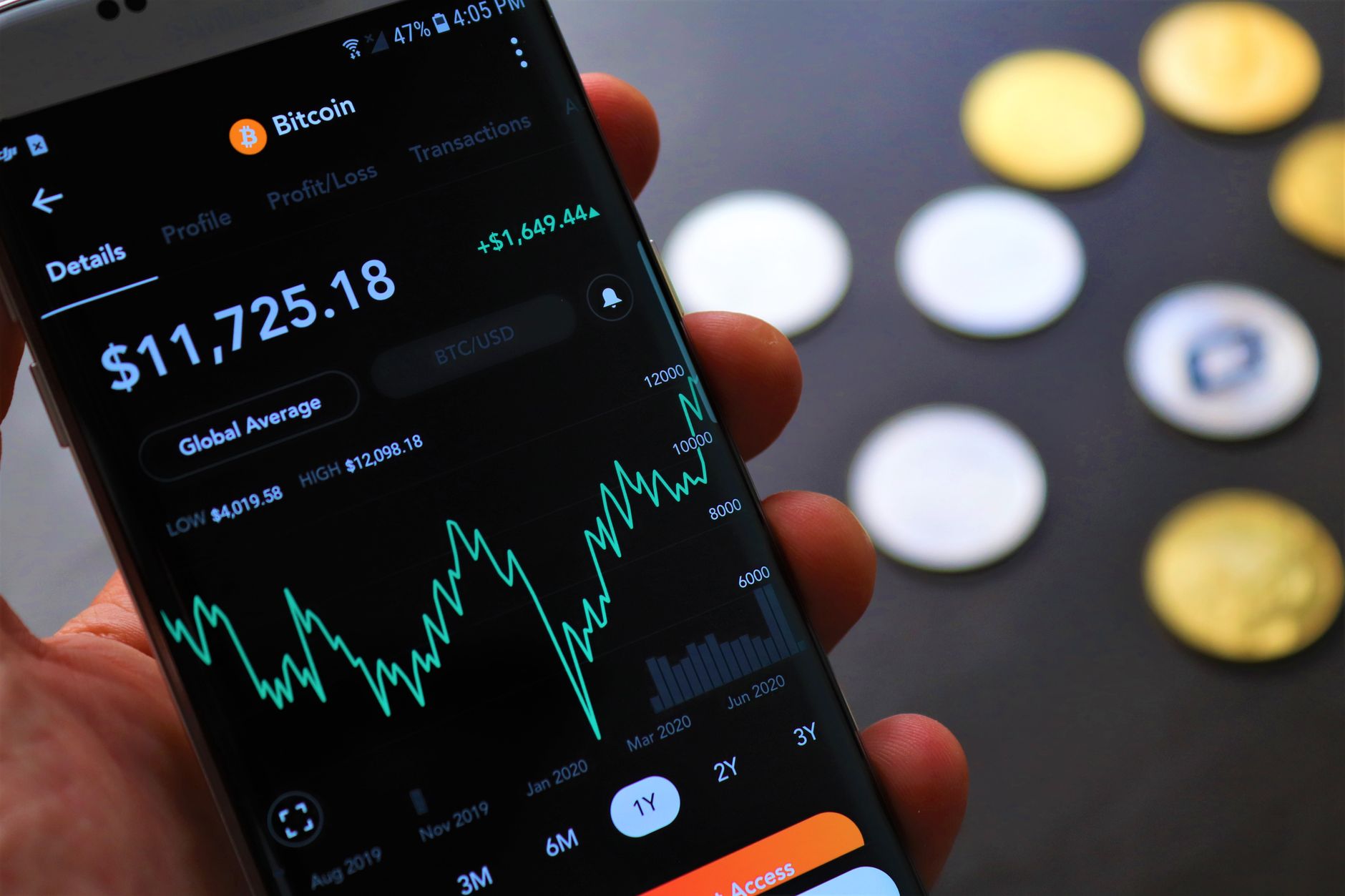
Bitcoin and crypto trading have moved from the fringes of the internet to mainstream financial news, catching the eye of many Indian investors who traditionally focus on stocks, mutual funds, and bonds. If you've been watching the Nifty 50 or Sensex swing on earnings reports and macro data, you might wonder whether allocating a slice of your portfolio to Bitcoin or Ethereum makes sense—and, more importantly, how to do it without jeopardizing the disciplined approach that has served you well in equity markets. This guide walks you through what every traditional investor should know before dipping a toe into crypto, blending theory with practical, India-specific steps you can start using today.
1. Understanding Bitcoin and Cryptocurrencies: Basics for the Stock Investor
At its core, Bitcoin is a decentralized digital asset that operates on a blockchain—a public ledger maintained by a network of computers (nodes) rather than a central authority like the RBI or SEBI. Think of it as a global, programmable commodity whose scarcity is coded into the protocol: only 21 million bitcoins will ever exist, much like how a company's share count is fixed after an IPO.
Key concepts to map onto your equity knowledge:
- Token vs. Share: A Bitcoin token represents a unit of value, not ownership in a company. Holding BTC is akin to holding gold or a foreign currency, not a stake in earnings or dividends.
- Market Cap: Just as you gauge a stock's size by market capitalization (price × shares outstanding), crypto assets are ranked by their total market cap. As of late 2024, Bitcoin's market cap hovers around US$ 600 billion, putting it in the same ball-park as large-cap Indian stocks like Reliance Industries or TCS.
- Liquidity & Trading Hours: Crypto trades 24/7 on global exchanges (Binance, Coinbase, WazirX, etc.), unlike the NSE's 9:15 am–3:30 pm IST window. This means price discovery never stops, which can amplify both opportunities and risks.
- Volatility Driver: While a stock's price reacts to earnings, guidance, or macro news, crypto prices are heavily influenced by sentiment, regulatory announcements, technological upgrades (e.g., Bitcoin's Taproot), and macro-liquidity flows (US dollar strength, interest-rate expectations).
Practical example: Imagine you bought 1 share of Infosys at ₹1,500 when the Nifty was at 18,000. Six months later, the share rose to ₹1,800 (+20 %). If you had instead bought 0.01 BTC at US$ 30,000 (≈₹ 2.5 lakhs) and Bitcoin climbed to US$ 45,000 (+50 %), your crypto position would have outperformed the stock in percentage terms—but also swung more wildly day-to-day.
2. How Crypto Markets Differ from Indian Equity Markets
| Feature | Indian Equity Market (NSE/BSE) | Crypto Market |
|---|---|---|
| Regulatory Oversight | SEBI, RBI, stock exchanges enforce strict disclosure, insider-trading rules, and investor protection. | No single Indian regulator; SEBI has warned about risks, while RBI bars banks from facilitating crypto transactions. Exchanges self-regulate or follow global bodies (e.g., FATF). |
| Trading Mechanism | Order-matching via electronic limit order books; circuit breakers halt extreme moves. | Similar limit order books on exchanges, but no circuit breakers; price can gap 20-30 % in minutes during news events. |
| Settlement | T+1 (trade date +1 day) for equities; dematerialized shares held in NSDL/CDSL. | Near-instant on-chain settlement (minutes) if you hold assets in a wallet; exchange-held balances follow the exchange's internal ledger. |
| Asset Backing | Claims on future cash flows, dividends, voting rights. | No cash flow; value derived from scarcity, utility (e.g., smart contracts), and network effects. |
| Tax Treatment | Capital gains taxed at 15 % (short-term) or 10 % (long-term after 1 yr) plus surcharge; dividends taxable. | Crypto treated as "virtual digital assets"; gains taxed at 30 % flat (no indexation) plus applicable cess, with 1 % TDS on transfers above ₹ 10 lakhs (FY 2024-25). |
| Market Participants | Institutional investors, retail, FIIs, DIIs, mutual funds, PMS. | Predominantly retail, hedge funds, proprietary trading firms, and a growing set of crypto-focused funds; limited Indian institutional participation due to regulatory uncertainty. |
Why it matters: The absence of SEBI-style circuit breakers means a single tweet from a regulator or a major exchange outage can trigger a 15 % swing in minutes—something you rarely see in the Nifty unless there's a macro shock (e.g., RBI policy change). Consequently, risk controls that work for equities (stop-losses based on technical levels) need to be tighter and often combined with position-size limits.
3. Risk Management: Volatility, Regulation, and Security
3.1 Volatility Management
- Position Sizing Rule: Many equity traders allocate no more than 2 % of their total capital to any single stock. Apply the same principle to crypto, but consider an even lower ceiling (1 %–1.5 %) because of higher volatility.
Example: If your portfolio is ₹ 50 lakhs, limit any single crypto exposure to ₹ 50,000–₹ 75,000. - Stop-Loss Strategy: Use a trailing stop-loss based on ATR (Average True Range) rather than a fixed percentage. Bitcoin's daily ATR can be 4-6 % during high-volatility periods; a 2× ATR stop may keep you from being whipsawed.
- Diversification Within Crypto: Rather than betting solely on Bitcoin, consider a small basket (BTC, ETH, maybe a large-cap altcoin like Binance Coin) to reduce idiosyncratic risk. Think of it as holding a sector-ETF instead of a single stock.
3.2 Regulatory Landscape in India
- SEBI's Stance: SEBI has repeatedly cautioned investors about the high risk and lack of investor protection in crypto. It does not regulate crypto exchanges, but it monitors advertisements that promise guaranteed returns.
- RBI's Banking Ban: While the Supreme Court lifted the RBI's banking ban in 2020, banks remain wary. Most Indian crypto users fund exchanges via UPI, IMPS, or third-party payment gateways rather than direct bank transfers.
- Taxation (Finance Act 2022): Crypto gains are taxed at 30 % plus surcharge and cess, with no allowance for loss set-off against other income. A 1 % TDS applies on crypto-to-crypto transfers exceeding ₹ 10 lakhs in a financial year. Maintaining detailed transaction logs is essential for accurate ITR filing.
3.3 Security Best Practices
- Cold Storage: For holdings you don't plan to trade frequently, move assets to a hardware wallet (Ledger, Trezor) or a reputable custodial service that offers multi-sig protection.
- Exchange Selection: Choose exchanges with strong KYC/AML compliance, insurance funds, and a clean track record (e.g., WazirX, CoinDCX, ZebPay). Verify that they store the majority of assets in cold storage.
- Two-Factor Authentication (2FA): Always enable 2FA via authenticator apps (Google Authenticator, Authy) rather than SMS, which is vulnerable to SIM-swap attacks.
- Phishing Vigilance: Bookmark the official exchange URLs; never click links from unsolicited emails or Telegram groups promising "free BTC."
4. Integrating Crypto into a Traditional Portfolio: Allocation Strategies
4.1 The Core-Satellite Approach
Think of your portfolio as a core of low-cost, diversified equity and debt holdings (e.g., Nifty 50 index fund, Sensex ETF, PPF, bonds) that delivers steady returns. The satellite portion holds higher-conviction, higher-risk assets—crypto being one of them.
| Allocation | Typical Range (₹ 50 lakhs portfolio) | Rationale |
|---|---|---|
| Core Equity (Nifty/Sensex index funds, large-cap stocks) | 60 %–70 % (₹ 30–35 lakhs) | Market-beta exposure, dividend income, long-term growth. |
| Core Debt (PPF, EPF, corporate bond funds, gilt funds) | 20 %–25 % (₹ 10–12.5 lakhs) | Capital preservation, regular income. |
| Satellite – Crypto | 5 %–10 % (₹ 2.5–5 lakhs) | Potential asymmetric upside; limited downside due to small size. |
| Satellite – Other Alternatives (gold, REITs, international equities) | 0 %–10 % | Diversification beyond domestic markets. |
Why 5 %–10 %? Historical back-tests (2017-2024) show that a 5 % crypto allocation improved the Sharpe ratio of a 60/40 equity-bond portfolio by roughly 0.15-0.20 points, mainly due to crypto's low correlation with Indian equities (correlation ≈ 0.1-0.2). Going beyond 10 % starts to dominate portfolio volatility, making the overall risk profile more akin to a pure crypto fund.
4.2 Rebalancing Discipline
- Quarterly Review: Check your crypto weight at the end of each quarter. If Bitcoin's price surge pushes its weight to 12 %, sell the excess and re-allocate to your core equity or debt buckets.
- Threshold-Based Triggers: Some investors use a 20 % deviation rule (e.g., if crypto weight moves outside 4 %–6 % for a 5 % target, rebalance). This prevents emotional decision-making during rallies or crashes.
4.3 Practical Example: Using Downstox Tools
Suppose you hold a Nifty 50 ETF (₹ 20 lakhs) and a PPF account (₹ 10 lakhs). You decide to allocate ₹ 3 lakhs (5 %) to Bitcoin.
- Research: Open Downstox's screener and filter for "crypto" or "digital assets" under the "Instrument Type" dropdown. You'll see live BTC/USD and BTC/INR pairs, along with volume, price change, and volatility metrics.
- Analysis: Switch to the terminal view, overlay Bitcoin's price chart with the Nifty 50 to visualize correlation over the past 6 months. Use the built-in technical indicators (RSI, MACD) to spot overbought/oversold zones.
- Execution: Place a limit order for ₹ 3 lakhs worth of BTC at your desired entry price (e.g., ₹ 28 lakhs per BTC ≈ 0.107 BTC). Downstox's order ticket lets you set a stop-loss and target directly, mirroring how you'd set a stop-loss on a stock trade.
- Monitoring: Add the BTC position to your portfolio X-Ray. The tool will show your overall asset allocation, highlight that crypto now represents 5 % of the total, and flag any drift beyond your set thresholds.
- Tax Tracking: At year-end, export the transaction history from Downstox (CSV) and feed it into your tax software; the 30 % crypto tax and 1 % TDS will be auto-calculated if you've enabled the crypto module.
This workflow shows how a traditional investor can leverage familiar equity-oriented tools to handle crypto without learning an entirely new ecosystem.
5. Practical Tools and Platforms: Using Downstox and Others for Research and Execution
While many crypto-native exchanges exist, blending them with your existing stock-trading stack reduces friction and keeps your risk-management framework consistent. Below is a toolkit tailored for Indian investors:
| Purpose | Tool (Downstox) | How to Use | Alternative (Crypto-Native) |
|---|---|---|---|
| Screening & Idea Generation | Screener – filter by asset class, volume, volatility, price change | Set "Instrument Type = Crypto", add filters like "24h Volume > ₹ 500 cr", "7-day Change > 5 %". Save as a watchlist. | CoinMarketCap screener, TradingView crypto pairs |
| Charting & Technical Analysis | Terminal – advanced charting with 100+ indicators, drawing tools | Open BTC/INR chart, apply Ichimoku Cloud, Fibonacci retracement, volume profile. Set alerts for price crossing key levels (e.g., 200-day MA). | TradingView, Coinigy |
| Portfolio Allocation & Risk Monitoring | Portfolio X-Ray – view asset class breakdown, sector exposure, risk metrics | Add your crypto holdings (via API key or manual entry). See overall equity-debt-crypto split, VaR, beta to Nifty. | Kubera, CoinTracker (for tax) |
| Fundamental Research (for crypto projects) | Mutual Fund Screener – though meant for funds, you can adapt it to screen crypto-focused ETFs or index funds (if available on Indian platforms) | Look for "Crypto Index Fund", "Bitcoin ETF" (e.g., if a global ETF is listed on NSE via IFSC). | Messari, Glassnode (on-chain metrics) |
| Order Execution | Downstox Order Ticket – market, limit, stop-loss, trailing stop | Place a limit order to buy BTC at ₹ 27 lakhs; attach a trailing stop-loss of 15 % to lock gains. | Binance spot market, WazirX advanced orders |
| Tax & Compliance | Downstox Tax Reports (if enabled) – export P&L, TDS details | Generate a crypto-specific P&L statement for FY 2024-25; cross-check with Form 26AS for TDS deducted by exchanges. | ClearTax crypto module, Quicko |
Tip: Keep a master spreadsheet that logs every crypto transaction (date, exchange, INR amount, BTC amount, fees). This makes reconciliation with Downstox's exported data painless and ensures you meet the 1 % TDS reporting requirement.
6. Taxation and Compliance in India: What SEBI and Income Tax Rules Say
6.1 Income Tax Treatment
- Classification: Crypto is treated as a "virtual digital asset" (VDA) under Section 2(47A) of the Income Tax Act.
- Tax Rate: Gains from transfer of VDA are taxed at 30 % plus applicable surcharge and health & education cess. No indexation benefit, no set-off against other income (e.g., salary, business profits).
- TDS: A 1 % TDS is deducted on the consideration paid for transfer of a VDA if the aggregate consideration exceeds ₹ 10 lakhs in a financial year. The deductor (usually the exchange) issues a TDS certificate (Form 16A) that you must include while filing ITR.
For information and education only. This article is for information and education only. Downstox is not a SEBI-registered Research Analyst or Investment Adviser, and nothing here is investment advice or a recommendation to buy or sell any security. Any views or calls attributed to third parties are theirs, not Downstox's. Markets carry risk; consult a SEBI-registered adviser before investing.
Downstox Markets Desk
Markets Desk · NSE · BSE · Nifty 50
Daily Indian-equities desk - Nifty, Sensex, sector wraps, technical analysis.
View Downstox Markets Desk's profile →Get weekly market insights delivered free
Curated Indian market analysis, every Sunday morning. Written by traders, for traders.
Join 10,000+ Indian traders. No spam. Unsubscribe anytime.
Related reads
More in beginner guide →
Fundamental vs Technical Analysis: A Guide for 2026 Investors

How to Start Investing in Indian Stock Market: A Complete Beginner Guide

Top Free Trading Tools for Indian Retail Investors 2026
Navigating India’s Stock Market: Nifty, Sensex & Downstox Guide

Free Trading Tools for Indian Retail Investors 2026 Guide
