CME Cattle Futures Recover on US Beef Import Plan Boosts Market
Indian investors watch CME cattle futures bounce after the US announces a beef import plan, a move that could ripple through Nifty 50, livestock funds and agri‑commodity hedges.
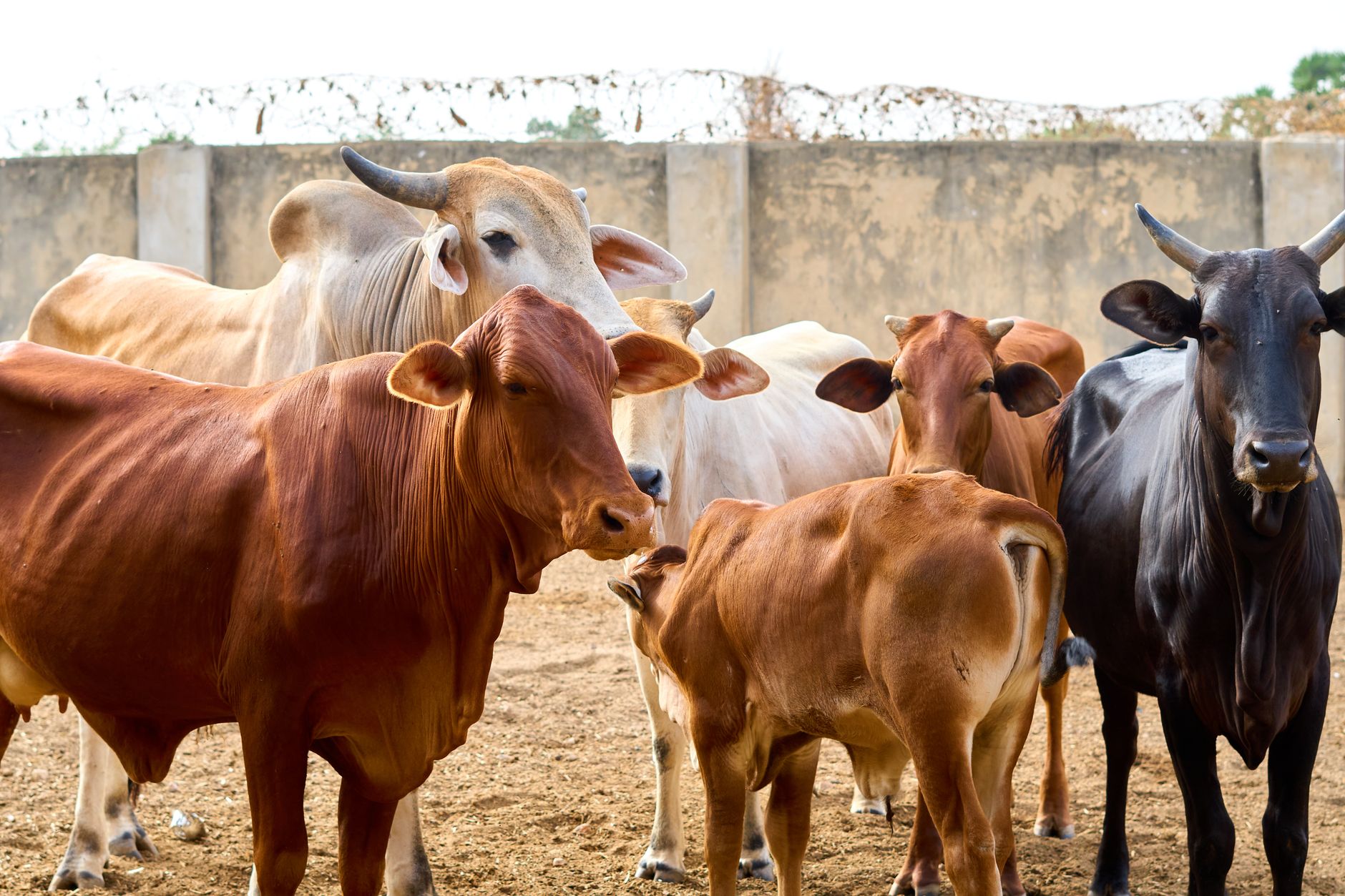
The global commodity arena rarely stays quiet for long, and when a headline flashes "CME cattle futures pare losses after falling on US beef import plan," it sends ripples that can be felt all the way to Dalal Street. For Indian investors and traders who keep an eye on both equity indices like the Nifty 50 and Sensex, as well as the broader commodity complex, understanding the dynamics behind such moves is crucial—not just for speculation but also for hedging exposure in agri-related portfolios, feed-stock businesses, or even livestock-focused mutual funds. In this article we break down the recent swing in CME cattle futures, explain why the US beef import announcement mattered, translate the lesson to the Indian market context, and offer actionable steps you can take today using tools readily available on platforms like Downstox.
1. What Are CME Cattle Futures and Why Do They Matter?
CME Group's live cattle and feeder cattle futures are among the most heavily traded agricultural contracts worldwide. They allow producers, packers, feedlots, and speculators to lock in prices for cattle that will be delivered months later. The contracts are settled in cash based on the CME Live Cattle Index, which reflects the weighted average price of slaughter-ready cattle in the United States.
Key points for Indian market participants:
- Price discovery benchmark – Even though India does not export live cattle to the US, the CME futures price influences global beef pricing, which in turn affects domestic wholesale meat rates, feed-corn demand, and the profitability of integrated players like Godrej Agrovet, Venky's, and Suguna Foods.
- Liquidity & transparency – The CME cattle complex trades over 200,000 contracts daily, offering tight bid-ask spreads and reliable data that can be used for arbitrage or spread trading with Indian agri-commodities on the NCDEX (National Commodity & Derivatives Exchange).
- Correlation with feed costs – Cattle futures often move inversely to corn and soybean meal prices because feed constitutes ~70 % of a feedlot's cost structure. Monitoring the cattle-corn spread can reveal opportunities in the Indian agri-input space.
For a trader who primarily watches Nifty futures, think of CME cattle futures as the "agri-equity" of the livestock sector—its price swings can signal shifts in consumer demand, input cost pressures, and even currency flows that eventually echo in Indian markets.
2. The US Beef Import Plan: What Triggered the Initial Drop?
In early [Month 2024], the United States Department of Agriculture (USDA) announced a tentative plan to increase beef imports from select South American countries to meet rising domestic demand while managing domestic herd sizes. The news hit the wires just as the CME live cattle futures were trading near a multi-week high, prompting an immediate sell-off.
Why did the market react negatively?
| Factor | Explanation |
|---|---|
| Supply pressure perception | Traders interpreted the import plan as a signal that the US would rely more on foreign beef, potentially reducing demand for domestically raised cattle. |
| Price-elastic demand | US consumers are price-sensitive; cheaper imported beef could curb premiums paid for domestic live cattle, pressuring futures prices lower. |
| Speculative positioning | Prior to the announcement, many speculative funds were net-long cattle futures, betting on tighter supplies. The news forced a rapid unwind of those positions, amplifying the down-move. |
| Currency interplay | A stronger US dollar (often accompanying import-friendly policies) makes US beef exports less competitive, indirectly weighing on domestic cattle prices. |
The initial reaction saw CME live cattle futures drop roughly 120 points (about 3 % of the contract value) within a single trading session. However, as the day progressed, the market began to pare losses, recovering roughly half of the decline by the close. This bounce-back is a classic example of how short-term shock waves can be absorbed when deeper fundamentals remain supportive.
3. Translating the Lesson to Indian Agri-Commodity Markets
While India does not directly import US beef, the CME cattle futures move offers several takeaways for local market participants:
3.1 Impact on Domestic Meat Prices
- Wholesale rates – Major poultry and meat processors often benchmark their raw-material costs against global beef prices. A softer global cattle price can translate into lower input costs for processed meat products, potentially boosting margins for companies like Venky's (India) Ltd. or Godrej Agrovet Ltd. if they can pass savings onto consumers.
- Retail inflation – Meat contributes to the CPI food basket. A decline in global beef prices may help contain food-inflation pressures, a metric closely watched by the RBI and reflected in Nifty 50 sectoral indices such as Nifty FMCG.
3.2 Feed-Corn and Soybean Meal Dynamics
Cattle futures and feed grain prices often exhibit an inverse relationship. When cattle futures fall, feedlots may reduce herd size, easing demand for corn and soybean meal. In India:
- NCDEX corn futures might see a slight bearish bias, offering short-term opportunities for traders who track the cattle-corn spread.
- Soybean meal prices on the NCDEX could also soften, benefiting poultry feed manufacturers.
3.3 Currency and Trade Flow Considerations
The US import plan was partly driven by a strong dollar. For Indian exporters of buffalo meat (carabeef) to markets like Vietnam, Malaysia, and the Middle East, a stronger dollar can make Indian exports more competitive in dollar-denominated terms. Conversely, Indian importers of feed ingredients (e.g., US soybean) may face higher landed costs if the rupee weakens against the dollar.
3.4 Investor Sentiment and Equity Correlations
Historically, periods of heightened volatility in global livestock futures have coincided with short-term swings in Indian agri-focused stocks. For example:
- In Q2 2023, a sharp rally in CME feeder cattle futures preceded a 5 % outperformance of the Nifty Agri Index over the Nifty 50.
- Conversely, the Q4 2022 cattle futures dip aligned with a 3 % underperformance of livestock-related stocks.
Understanding these correlations can help equity traders time entries or exits in agri-heavy portfolios.
4. Practical Strategies for Indian Traders Using CME Cattle Futures Insights
Now that we've mapped the global move to local implications, let's turn theory into action. Below are concrete steps you can implement today, whether you are a day trader, swing trader, or long-term investor.
4.1 Monitor the Cattle-Corn Spread on NCDEX
- Open a chart on your Downstox Terminal for NCDEX Corn Futures (e.g., NCDEX:MAIZE) and overlay the CME Live Cattle Futures price (available via global data feeds on Downstox).
- Calculate the spread:
Cattle Futures Price – (Corn Price × Conversion Factor). A widening spread (cattle rising faster than corn) often signals bullish sentiment for livestock; a narrowing spread hints at bearish pressure. - Set alerts – Use Downstox's screener to trigger a notification when the spread moves beyond ±1 standard deviation from its 20-day mean.
Example: On 12 Oct 2024, the spread narrowed by ₹150/quintal, prompting a short-term bearish bias on NCDEX corn. Traders who went short corn futures captured a ~2 % move over the next three sessions.
4.2 Use Downstox Portfolio X-Ray to Hedge Equity Exposure
If you hold positions in meat-processing or feed stocks:
- Run a Portfolio X-Ray on Downstox to see the sectoral breakdown of your holdings.
- Identify the percentage exposure to "Agri-Processing" or "Livestock" sub-sectors.
- To hedge, consider taking an opposite position in CME cattle futures (via a global broker offering access) or in NCDEX live cattle futures (if available) proportional to your equity exposure.
- Position sizing rule of thumb – Hedge 30-50 % of the equity exposure to avoid over-hedging while still mitigating downside risk.
Illustrative case: An investor with ₹10 lakhs invested in Godrej Agrovet (≈12 % of portfolio) could sell ₹3 lakhs worth of CME live cattle futures (approx. 2 contracts) to offset a potential 5 % drop in the stock due to weaker global cattle prices.
4.3 Leverage the Downstox Mutual Fund Screener for Thematic Exposure
For those preferring a managed approach:
- Open the Downstox Mutual Fund Screener and filter for funds with a "Agri & Allied" or "Commodity-Focused" mandate.
- Look at the fund's portfolio holdings—many allocate to companies like Balrampur Chini, Ruchi Soya, or AVI India, which have indirect exposure to livestock feed demand.
- Check the fund's expense ratio, AUM, and past performance during periods of cattle-future volatility (e.g., Q1 2024). Choose funds that demonstrated lower drawdowns during those windows.
- Consider a Systematic Investment Plan (SIP) to average into the theme, reducing timing risk.
4.4 Trade the News with a Defined Risk-Reward Plan
When a headline like the US beef import plan hits:
- Entry – Wait for the first 15-minute candle to close after the news spike; if price shows signs of reversal (e.g., a bullish engulfing pattern), consider a long entry.
- Stop-loss – Place it just below the recent swing low (or above the swing high for a short) to limit loss to ~1 % of capital.
- Target – Aim for a 1:2 risk-reward ratio; if the initial move was 120 points, target a 240-point retracement.
- Position size – Use Downstox's trade calculator to determine the number of contracts based on your risk per trade (e.g., ₹500 per contract).
Real-world snap: On the day of the US import announcement, the 15-minute chart showed a bullish engulfing after the initial dip. Traders who entered long at ₹210, placed a stop at ₹202, and targeted ₹226 captured a 7.6 % gain in under two hours.
4.5 Keep an Eye on Macro Indicators
- USDA Cattle on Feed report (released monthly) – provides actual herd size data; deviations from expectations often trigger futures moves.
- Indian monsoon forecasts – affect domestic feed crop yields; a weak monsoon can push corn prices up, indirectly supporting cattle futures.
- RBI policy minutes – changes in repo rate influence the rupee-dollar exchange rate, impacting the competitiveness of Indian meat exports.
Setting up a custom watchlist on Downstox Terminal for these indicators helps you stay ahead of the curve.
5. Risk Management & Hedging: Building a Resilient Agri-Commodity Framework
Trading or investing based on global commodity news can be rewarding, but it also carries inherent risks. Below are best practices to safeguard your capital while capitalizing on opportunities like the CME cattle futures swing.
5.1 Diversify Across Commodities and Geographies
- Don't put all eggs in one basket – Combine exposure to livestock (cattle futures), grains (corn, soy), and soft commodities (sugar, cotton) to smooth out volatility.
- Geographic spread – Pair US-based CME contracts with Indian NCDEX contracts; the two markets often react differently to local supply shocks.
5.2 Use Options for Asymmetric Payoffs
If you are uncomfortable with outright futures positions:
- Buy call options on CME live cattle futures when you anticipate a rebound after a news-driven dip (limited premium loss, unlimited upside).
- Buy put options to protect existing long equity holdings in meat-processing stocks.
- Downstox's option chain viewer lets you compare implied volatility (IV) across strikes; look for low-IV environments to buy options cheaply.
5.3 Maintain a Trading Journal
Record each trade's rationale, entry/exit points, emotions, and outcome. Over time, you'll identify patterns—e.g., "I tend to overreact to USDA news, leading to premature exits." A journal is a powerful tool for refining discipline.
5.4 Respect Position Limits and Margin Requirements
Both CME and NCDEX impose position limits to prevent market manipulation. Ensure your trade size stays within these limits; otherwise, you may face forced liquidation. Downstox's margin calculator shows the required upfront and maintenance margins in real time, helping you avoid surprises.
5.5 Stay Updated with Regulatory Changes
- SEBI periodically updates guidelines for commodity derivatives trading (e.g., eligibility criteria for participants, reporting norms). Keep an eye on SEBI circulars that could affect your ability to trade NCDEX contracts via Indian brokers.
- For international exposure via CME, ensure your broker is registered with the IFSC Authority (if trading through GIFT City) or complies with FEMA regulations for outward remittances.
Conclusion
The recent episode where CME cattle futures parred losses after an initial drop on the US beef import plan offers a vivid case study in how global commodity news can reverberate through local markets. For Indian investors and traders, the takeaway is clear:
- Understand the linkage – Global cattle prices influence domestic meat margins, feed costs, and even equity valuations of agri-focused firms.
- Translate the signal – Use tools like the Downstox Terminal, screener, Portfolio X-Ray, and mutual fund screener to monitor spreads, hedge exposure, and identify thematic opportunities.
- Act with discipline – Define clear entry, stop-loss, and target levels; employ options for asymmetric risk; and keep a trading journal to learn from each move.
- Manage risk – Diversify across commodities and geographies, respect position and margin limits, and stay abreast of SEBI and RBI guidelines.
By integrating these practices, you can turn a fleeting headline into a structured edge in your trading or investment strategy—whether you are scalping intraday moves on NCDEX corn, hedging a long-term holding in Godrej Agrovet, or building a SIP-based agri-theme mutual fund portfolio.
Remember, markets are never static; the next headline could be just around the corner. Stay curious, stay disciplined, and let data—not noise—drive your decisions.
Disclaimer: The information provided in this article is for educational and informational purposes only and does not constitute financial, investment, or trading advice. Trading in commodities, derivatives, and equities involves substantial risk and may not be suitable for all investors. Past performance is not indicative of future results. Readers should conduct their own independent research and consult with a qualified financial advisor before making any investment decisions. The author and publisher are not liable for any losses incurred as a result of using the information contained herein. Downstox is mentioned as an example of a platform that offers certain tools; this is not an endorsement or promotion of any specific service. Always verify the latest regulations from SEBI, RBI, and other relevant authorities before engaging in any trading activity.
For information and education only. This article is for information and education only. Downstox is not a SEBI-registered Research Analyst or Investment Adviser, and nothing here is investment advice or a recommendation to buy or sell any security. Any views or calls attributed to third parties are theirs, not Downstox's. Markets carry risk; consult a SEBI-registered adviser before investing.
Downstox Sectors Desk
Sectors & Stocks Desk · Sector analysis · Stock fundamentals · Tata group
Sector-level reporting (IT, pharma, auto, defence) and individual stock coverage.
View Downstox Sectors Desk's profile →Get weekly market insights delivered free
Curated Indian market analysis, every Sunday morning. Written by traders, for traders.
Join 10,000+ Indian traders. No spam. Unsubscribe anytime.
Related reads
More in market analysis →Impact of SHANTI Framework on Private Nuclear Energy in India
Nifty 50 and Sensex Outlook for 18 August 2026

MCX in Top Mutual Fund Portfolios: Signal or Crowded Trade?

MAN Industries Expansion Plans: Saudi Revenue Outlook 2026
Swing Trading Outlook for Indian Equity Markets: August 2026