How Indian Pro Traders Leverage Market Depth & Order Flow
Discover how Indian equity traders read Level II depth and order flow to spot hidden liquidity, anticipate moves, and fine‑tune entries using tools like Downstox.
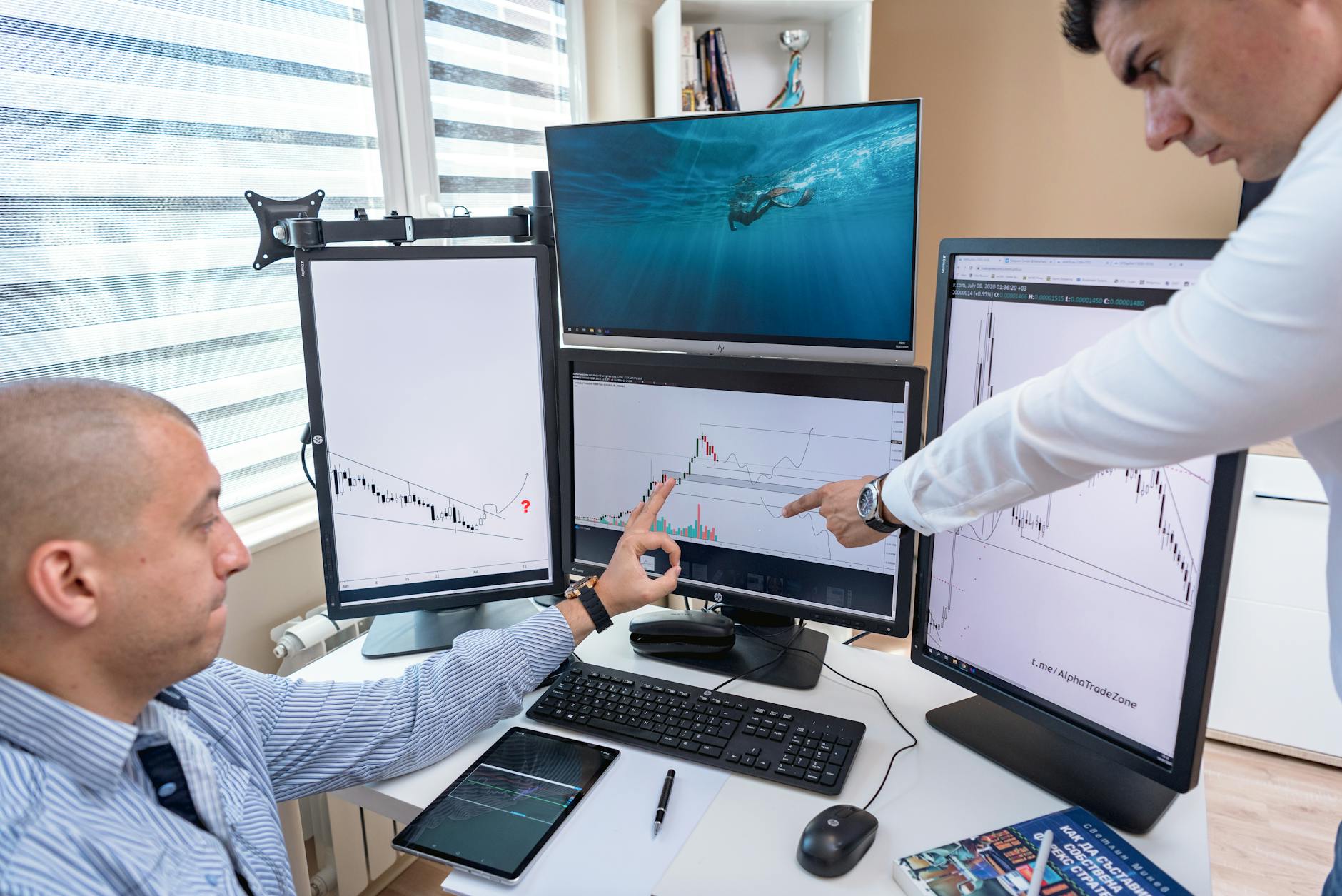
Professional traders in the Indian equity markets don't rely solely on price charts or news headlines. They look beneath the surface—into the order book and the stream of trades that make up market depth and order flow. By interpreting who is buying, who is selling, and at what levels large orders are sitting, they can anticipate short-term moves, spot hidden liquidity, and time entries and exits with far greater precision than the average retail investor.
If you've ever wondered why a stock seems to "defy" technical patterns or why a sudden spike occurs without any apparent news, the answer often lies in the hidden dynamics of depth and flow. This article breaks down those concepts, shows how seasoned market participants use them, and gives you actionable ways to incorporate the same ideas into your own trading—using tools that are readily available on platforms like Downstox (screener, terminal, portfolio X-Ray, and mutual fund screener).
1. What Is Market Depth (Level II) and Why It Matters
Market depth, often displayed as Level II data, shows the bid-ask ladder—the queue of limit orders waiting to be executed on both sides of the market. In the NSE, you'll see something like:
| Price (₹) | Bid Quantity | Ask Quantity |
|---|---|---|
| 1,820.00 | 12,500 | – |
| 1,819.95 | 8,300 | – |
| 1,819.90 | 4,200 | – |
| 1,819.85 | – | 6,100 |
| 1,819.80 | – | 9,400 |
| 1,819.75 | – | 15,200 |
The bid side shows how many shares traders are willing to buy at each price; the ask side shows the opposite. The depth tells you:
- Liquidity zones – where large orders are stacked, acting as invisible support or resistance.
- Imbalance – a sudden shift where bids vastly outnumber asks (or vice-versa) that can precede a price move.
- Order absorption – when price ticks up but the ask side remains thick, indicating sellers are absorbing buying pressure.
Practical Example
Suppose Reliance Industries is trading at ₹2,500. You notice that at ₹2,498 there is a bid of 1.5 million shares, while the ask at ₹2,502 is only 200 k shares. This heavy bid suggests strong buying interest just below the current price. If a market order hits the ask, the price may barely move because the deep bid will quickly fill the sell pressure, potentially creating a short-term bounce.
How to View Depth on Downstox
In the Downstox Terminal, enable the "Depth" widget (usually a vertical ladder on the right side of the chart). You can customize the number of price levels shown (5, 10, 20) and even highlight orders above a certain size threshold—useful for spotting institutional interest.
2. Understanding Order Flow: The Real-Time Pulse of the Market
While depth shows where orders sit, order flow tells you what is happening right now—the actual execution of trades. It consists of:
- Trade prints – each executed transaction (price, volume, timestamp).
- Aggressor side – whether the trade was initiated by a buyer (buyer-aggressor) or seller (seller-aggressor).
- Cumulative delta – the running total of buyer-aggressor volume minus seller-aggressor volume over a period.
Why Order Flow Beats Pure Price Action
Price can move on low volume (a "fakeout") or stall on high volume (absorption). Order flow reveals the intent behind the price change. For instance, a price rise accompanied by strong buyer-aggressor delta indicates genuine buying pressure; a rise with weak delta may be a short-covering rally that could reverse quickly.
Visual Tools
Many traders use footprint charts or volume-profile-by-price (VPP) to visualize order flow. In the Downstox terminal, the "Order Flow" pane (available under advanced charting) prints each trade as a colored bar—green for buyer-aggressor, red for seller-aggressor—stacked by price level. Over time, you see clusters of aggression that highlight supply/demand imbalances.
Real-World Example
During the March 2024 rally in TCS, the order-flow footprint showed a persistent buyer-aggressor bias at ₹3,400-₹3,450, even as the price hovered sideways. When the price finally broke above ₹3,460, the delta turned sharply positive, confirming that the breakout was backed by aggressive buying—not just passive limit orders sitting on the ask.
3. How Professionals Combine Depth & Flow for Edge
Seasoned traders don't look at depth or flow in isolation; they cross-reference them to confirm signals and filter noise. Here's a typical workflow:
- Identify a liquidity zone using depth (e.g., a large bid stack at ₹1,820).
- Watch order flow as price approaches that zone:
- If buyer-aggressor volume increases while price bids up, the depth is likely to hold → potential long entry.
- If seller-aggressor volume spikes and the bid starts to thin, the zone may be absorbed → consider a short or wait for re-accumulation.
- Check the cumulative delta over the last few minutes: a divergence (price making new highs but delta flattening) warns of weakening momentum.
- Execute with a limit order just inside the depth (e.g., buy at ₹1,819.95 if the bid is strong) to reduce slippage, and place a stop-loss beyond the nearest opposite-side depth (e.g., below ₹1,818.80 where the ask stack thins).
Example: Intraday Swing in HDFC Bank
Depth: At 10:15 AM, the bid side shows 800k shares at ₹1,620 and 600k at ₹1,619.5; the ask side is thin—only 150k at ₹1,621.
Order Flow: Over the next 5 minutes, buyer-aggressor volume totals 1.2 M shares, seller-aggressor only 300k; cumulative delta rises sharply.
Action: A professional might enter a long at ₹1,620.05 (just inside the bid), target the next resistance at ₹1,623 (where ask depth starts to build), and set a stop at ₹1,618.80 (below the thin ask). The trade captures a 15-point move with minimal slippage.
Why This Works in the Indian Context
Indian equities often exhibit liquidity clustering around round numbers (e.g., ₹1,800, ₹2,000) due to retail participation and algorithmic order slicing. Depth reveals those clusters; order flow shows whether the clusters are being respected or swept away. Combining both gives you a view that pure price-action charts simply cannot provide.
4. Leveraging Downstox Tools for Depth & Flow Analysis
Downstox offers a suite of features that let you bring institutional-grade depth and flow insights to your desktop or mobile device—without needing expensive third-party feeds.
| Tool | How It Helps with Depth/Flow | Practical Tip |
|---|---|---|
| Downstox Screener | Filter stocks by average traded volume, bid-ask spread, or percentage of large orders (>1 Lakh shares) to find instruments with sufficient depth for analysis. | Use a screener that shows "Avg. Bid Size > 5L" and "Avg. Ask Size > 5L" to focus on liquid large-caps (Nifty 50, Bank Nifty). |
| Downstox Terminal | Real-time Level II ladder, order-flow footprint, and time-&-sales window all in one layout. You can lock multiple watchlists and synchronize depth across charts. | Enable the "Depth + Order Flow" split view: left chart for price action, right ladder for depth, bottom pane for footprint. Set alerts when bid-ask imbalance exceeds a 2:1 ratio. |
| Portfolio X-Ray | While primarily a portfolio analytics tool, it shows sector concentration and holding turnover. High turnover in a holding often correlates with active order flow, hinting at possible institutional activity. | If X-Ray reveals a spike in turnover for a stock you're watching, check its depth/flow for signs of accumulation or distribution. |
| Mutual Fund Screener | Identify funds that are overweight or underweight in a sector. Large fund rebalancing can create predictable depth imbalances (e.g., a fund selling a big block creates a temporary ask wall). | When a fund screener shows a sudden drop in a fund's holding of a stock, monitor the ask side for a growing wall—potential short-term pressure. |
Setting Up a Depth-Flow Workflow (Step-by-Step)
- Pre-Market Scan – Run the Downstox screener for Nifty 200 stocks with avg. daily volume > 2 L and spread < 0.1 %. Export the list to a watchlist.
- Open Terminal – Load the watchlist, tile four charts per screen (price, depth, order flow, volume profile).
- Define Alerts – In the depth pane, set a notification when the bid-ask ratio (total bid qty / total ask qty) > 1.5 for > 30 seconds. In the order-flow pane, alert when cumulative delta changes direction after a sustained trend.
- Trade Execution – Use limit orders placed at the best bid/ask inside the depth. Attach a bracket order (target + stop-loss) directly from the trade ticket.
- Post-Trade Review – Use Portfolio X-Ray to see how the trade affected your sector exposure; note any changes in fund holdings via the mutual fund screener for future context.
5. Actionable Strategies Based on Depth & Flow
Below are three battle-tested approaches that professional traders adapt to the Indian market. Each includes entry, exit, and risk-management guidelines.
A. Liquidity-Pullback Long (Intraday)
Concept: Enter on a short-term pullback into a strong bid zone, expecting the depth to absorb selling pressure and push price higher.
Setup:
- Identify a stock with a bid wall ≥ 2× the average 5-minute bid size.
- Wait for price to dip to within 0.2-0.5 % of the bid wall.
- Confirm with buyer-aggressor delta turning positive on the pullback (even if price is still falling slightly).
Entry: Limit buy at the best bid price (or 1-2 ticks inside).
Target: Next ask level where depth starts to thin (often the next round number or prior high).
Stop-Loss: Just below the lowest bid level of the wall (e.g., if the wall spans ₹1,820-₹1,819.5, place SL at ₹1,818.9).
Example: On 12 Oct 2024, Infosys showed a bid wall of 1.2 M shares at ₹1,480. Price pulled back to ₹1,479.20 with buyer-aggressor delta + 150k. Long entry at ₹1,479.25, target ₹1,482.5 (next ask resistance), SL at ₹1,478.0. Result: +₹3.25 per share (~0.22%) in 12 minutes.
B. Aggressor-Absorption Short (Scalp)
Concept: Spot when seller-aggressor volume overwhelms a thin ask, indicating that the ask wall is being eaten and price may drop sharply.
Setup:
- Locate an ask wall that is relatively thin (≤ 30 % of average ask size).
- Monitor order flow: a burst of seller-aggressor trades hitting the ask.
- Check cumulative delta turning negative sharply.
Entry: Market or limit sell at the best ask (or 1-2 ticks outside).
Target: Next bid level where depth builds (often a prior low or support).
Stop-Loss: Just above the highest ask level of the wall.
Example: On 3 Nov 2024, LTIM had an ask wall of only 180k shares at ₹3,420 while the average ask size was 600k. Over 2 minutes, seller-aggressor volume hit 500k, delta plunged – 400k. Short at ₹3,420.10, target ₹3,415 (next bid support), SL at ₹3,423.5. Profit: ~₹5 per share (0.15%) in 5 minutes.
C. Institutional Accumulation Detection (Swing)
Concept: Use depth-flow divergence to spot when large players are quietly accumulating (or distributing) over several sessions, setting up a medium-term move.
Setup:
- Look for a steady increase in bid size at a price level over 3-5 days, while ask size remains flat or declining.
- Simultaneously, observe consistent buyer-aggressor delta on up-days and low seller-aggressor volume on down-days (absorption).
- Confirm with rising delivery % (from NSE Bhavcopy) and increasing institutional holdings (via mutual fund screener).
Entry: Buy on a breakout above the recent high with volume > 1.5× average.
Target: Measured move based on the height of the accumulation zone or next resistance.
Stop-Loss: Below the lowest bid of the accumulation zone.
Example: Over the week of 18-22 Nov 2024, Maruti Suzuki displayed a growing bid stack at ₹9,800-₹9,850 (increasing from 400k to 900k shares). Daily buyer-aggressor delta stayed positive (+ 200k to + 350k) even on minor down-days. Delivery % rose from 22 % to 28 %. On 23 Nov, price broke above ₹9,860 on volume 2.3× average. Long entry at ₹9,862, target ₹10,020 (previous high), SL at ₹9,780. Trade yielded ~₹158 per share (1.6%) over 10 days.
6. Risk Management & Common Pitfalls
Even the best depth-flow read can fail if risk controls are lax. Keep these principles front-and-center:
| Pitfall | Why It Happens | How to Avoid |
|---|---|---|
| Chasing the Tape | Reacting to every aggressive trade without checking depth leads to entering into thin markets where slippage kills profit. | Always verify that the aggressor surge is met with sufficient opposite-side depth; if not, stay out or reduce size. |
| Ignoring Spread Costs | In low-liquidity stocks, the bid-ask spread can be several ticks, eroding edge. | Use the screener to filter for spreads < 0.1 % (or < ₹0.05 for low-priced stocks). |
| Over-leveraging on Perceived Strength | A strong bid wall can give false confidence; hidden iceberg orders may be replenishing the ask side. | Monitor the refresh rate of depth: if the bid wall constantly gets refilled while price stalls, it may be a distribution signal. |
For information and education only. This article is for information and education only. Downstox is not a SEBI-registered Research Analyst or Investment Adviser, and nothing here is investment advice or a recommendation to buy or sell any security. Any views or calls attributed to third parties are theirs, not Downstox's. Markets carry risk; consult a SEBI-registered adviser before investing.
Downstox Macro Desk
Macro & Policy Desk · RBI monetary policy · Indian fiscal policy · GST
RBI, Centre policy, FX, FII flows, global macro spillover into Indian markets.
View Downstox Macro Desk's profile →Get weekly market insights delivered free
Curated Indian market analysis, every Sunday morning. Written by traders, for traders.
Join 10,000+ Indian traders. No spam. Unsubscribe anytime.
Related reads
More in trading strategies →
As the U.S.-Iran war heats up again, these parts of the stock market and economy could be affected

HDFC Bank Q1 Results: Net profit rises 5% YoY to Rs 19,060 crore, NII up 7%

Tensions with Iran add fresh uncertainty to an already shaky global economy

RBI tightens governance framework, redefines bank board responsibilities

Aegis Logistics among 4 stocks that closed below VWAP