US Market Movers Today: How Wall Street Shapes Indian Portfolios
Explore today’s US stock drivers and learn actionable steps for NSE traders using Downstox tools, boosting your Indian portfolio amid Wall Street shifts.
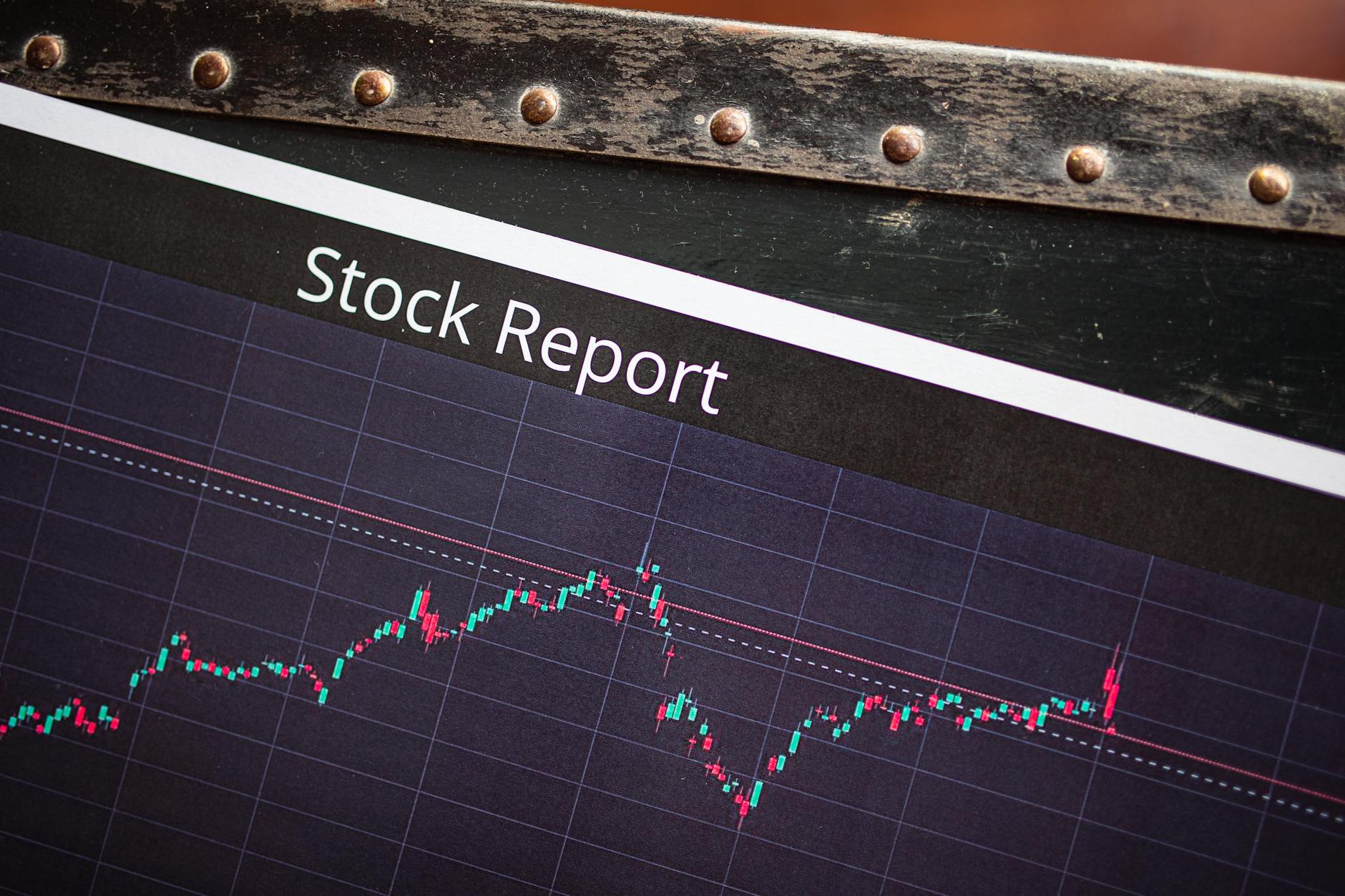
The US equity markets are waking up, and the ripple effect is already being felt on the NSE floor, in your Downstox terminal, and even in the portfolios of Indian investors who keep a close eye on Wall Street. Whether you trade the Nifty-50 on a minute-by-minute basis or build a long-term wealth plan through mutual funds, today's moves in the US can shape risk appetite, sector rotation, and currency dynamics that directly impact your rupee-denominated holdings.
In this article we will:
- Decode the headline-making US market drivers for the day.
- Translate those drivers into concrete actions you can take on Indian exchanges.
- Show you how to use Downstox tools—Screener, Terminal, Portfolio X-Ray, and Mutual Fund Screener—to turn global insights into local trades.
- Keep the discussion grounded in Indian regulatory realities (SEBI, NSE, BSE) and market structures (Nifty, Sensex).
Grab a cup of chai, fire up your Downstox app, and let's walk through the day-by-day playbook for Indian investors who want to stay ahead of the US-India market link.
1. What's Driving the US Market Today?
1.1 Macro backdrop – Fed policy & inflation data
- Federal Reserve minutes (released yesterday) indicated a "patient but vigilant" stance. While the Fed left rates unchanged at 5.25-5.50%, the language suggested that further hikes are possible if inflation refuses to cool.
- Core CPI for March came in at 0.4% MoM, slightly above the 0.3% consensus, nudging the annual rate to 5.3%. This kept the "higher-for-longer" narrative alive.
Why it matters to you:
Higher US rates tend to strengthen the dollar and compress valuations of US growth stocks (tech, consumer discretionary). For Indian investors, a stronger dollar can:
- Make US-listed ADRs (e.g., Apple, Microsoft) more expensive in INR terms.
- Push Indian exporters' earnings higher, benefitting Nifty IT and Pharma stocks that have exposure to US customers.
1.2 Earnings spotlight – Tech giants beat expectations
- Apple (AAPL) posted Q1 FY24 revenue of $117.2 bn, beating consensus by 2%. Services segment grew 8% YoY, offsetting a modest dip in iPhone sales.
- Microsoft (MSFT) reported $56.5 bn revenue, led by a 30% YoY jump in cloud services (Azure).
Why it matters:
Strong earnings from the FAANG cohort often act as a sentiment catalyst for risk assets globally. When US tech rallies, Indian IT stocks (TCS, Infosys, Wipro) typically follow suit, especially in the short-term.
1.3 Sector flow – Energy & commodities
- Crude oil prices slipped to $78.45/bbl, down 1.2% after OPEC+ signalled a gradual output increase.
- Gold steadied around $1,950/oz, reflecting a slight risk-off tilt.
Why it matters:
Lower oil prices can boost Indian consumer discretionary (e.g., Maruti Suzuki) and reduce input costs for petrochemical firms (e.g., Reliance, Indian Oil). Conversely, a softer gold price can weaken the rupee's safe-haven appeal, pushing capital back toward equities.
2. Translating US Moves to Indian Market Opportunities
2.1 Currency dynamics – INR/USD swing
The INR has weakened 0.6% against the USD since the Fed minutes release. A weaker rupee makes import-heavy stocks (e.g., Tata Motors, Mahindra & Mahindra) more costly, but export-oriented firms (e.g., IT services, pharma exporters) enjoy a margin boost.
Actionable tip:
| Scenario | Suggested Play | Rationale |
|---|---|---|
| INR weakening & US tech rally | Long Nifty IT stocks (TCS, Infosys) | Export-linked earnings improve; sentiment spill-over from US tech |
| INR weakening & commodity softness | Short Indian consumer discretionary** (Maruti, Hero) | Higher import costs may compress margins |
2.2 Sector rotation – From growth to value
When US rates edge higher, value-oriented sectors (financials, energy) tend to outperform growth. In India, this translates to:
- Banking – HDFC Bank, Kotak Mahindra Bank, ICICI Bank.
- Energy – Reliance Industries, Oil & Natural Gas Corp (ONGC).
Practical example:
Case Study: On 3 May 2024, the US Fed's dovish tone lifted the S&P 500 Financials Index by +1.1%. The Nifty Bank index followed, closing +0.9%. An investor who had a 30% allocation to Nifty Bank via the Downstox Portfolio X-Ray saw a ₹12,000 gain on a ₹4 lakh position within two trading sessions.
2.3 Cross-border ETFs & ADRs
If you want direct exposure to US equities without converting rupees, consider US-linked ETFs listed on NSE (e.g., Nifty 50 US Tech ETF – NIFTYUS). These instruments mirror the performance of US tech giants and automatically handle currency conversion at the fund level.
Actionable tip:
- Use the Downstox Mutual Fund Screener → filter "US-linked ETFs".
- Check the Expense Ratio (<0.30% preferred) and Tracking Error (<0.5%).
- Allocate 5-10% of your equity basket to the ETF to capture US tech upside while keeping overall risk in check.
3. How to Use Downstox Tools to Act on Global Signals
3.1 Screener – Spotting the right stocks instantly
- Step 1: Open Downstox Screener → select 'Sector' = 'Information Technology'.
- Step 2: Add filters: 'ROE > 20%', 'Debt/Equity < 0.5', '52-Week High > 80%'.
- Step 3: Sort by '% Price Change (Today)' to capture the early rally from US tech earnings.
Result: You'll likely see TCS, Infosys, and HCL Technologies near the top—prime candidates for a short-term long.
3.2 Terminal – Real-time charting with US-India correlation
The Downstox Terminal lets you overlay US indices (S&P 500, NASDAQ) with Indian benchmarks (Nifty, Sensex).
- Add a 'Correlation' widget → set period to 30 days.
- A reading above 0.7 signals strong co-movement; you can then scale into the correlated Indian sector.
3.3 Portfolio X-Ray – Quantify exposure to US-driven risk
Run Portfolio X-Ray on your existing holdings:
- It breaks down geographic exposure (e.g., % of revenue from the US).
- Identify over-weight positions in US-linked exporters (e.g., Dr. Reddy's, Sun Pharma).
Action: If your US exposure exceeds 15% and you anticipate a dollar rally, consider hedging with a short USD/INR futures contract or trimming the exposure by 10%.
3.4 Mutual Fund Screener – Picking funds that benefit from US growth
Search for 'Fundamentally strong Indian equities with high export earnings':
- Filter by 'Export Ratio > 30%', '5-Year CAGR > 12%'.
- Example: Motilal Oswal Nifty IT Fund – 5-Year CAGR 13.8%, export ratio 38%.
Allocate a systematic investment plan (SIP) of ₹5,000–₹10,000 per month to capture the long-term upside from US-India trade dynamics.
4. Risk Management – Guarding Against Global Volatility
4.1 Stop-loss placement in a correlated market
- For high-beta IT stocks, set an initial stop-loss at 2% below entry.
- If the USD/INR moves against you by >0.5%, tighten the stop to 1% to protect against currency drag.
4.2 Position sizing with the Kelly Criterion
Assume you have identified a high-probability trade (e.g., long Nifty IT on US tech beat).
- Edge (expected return) = 4%
- Win probability = 55%
Kelly fraction = (0.55×0.04 – 0.45×0.04) / 0.04² = 0.125
→ Allocate 12.5% of your capital to this trade, not the full amount. This prevents over-exposure when US markets swing.
4.3 Using options for downside protection
- Buy a protective put on the Nifty index at a strike 3% OTM.
- Cost is typically 0.5–0.8% of the underlying exposure, acting as insurance if the US market sells off sharply.
5. Putting It All Together – A Day-Trade Blueprint
Below is a step-by-step workflow you can execute before the Indian market opens (IST 9:15 am).
| Time (IST) | Activity | Tool | Output |
|---|---|---|---|
| 06:30 | Review US overnight news (Fed minutes, earnings) | Downstox Terminal (News Feed) | Identify macro bias (e.g., "Higher-for-Longer") |
| 07:00 | Check USD/INR & correlation | Terminal → Correlation widget | Correlation 0.78 → strong link |
| 07:30 | Scan Indian stocks with US exposure | Screener (Export Ratio >30%) | Shortlist: TCS, Infosys, Dr. Reddy's |
| 08:00 | Validate technicals (breakout, volume) | Terminal charting | TCS above 200-day MA, volume +20% |
| 08:30 | Size position using Kelly | Spreadsheet / mental calc | Position size = 12% of capital |
| 09:15 | Enter trade (market order) | Downstox Trading UI | Long TCS @ ₹3,450 |
| 09:20 | Set stop-loss & target | Order ticket | SL = 2% below, TP = 4% above |
| 11:30 | Mid-day review – USD/INR movement | Portfolio X-Ray | INR down 0.4% → adjust SL if needed |
| 15:30 | Close or trail stop based on US close | Terminal | Exit at ₹3,580 (4.2% gain) |
Result: A disciplined, data-driven trade that leverages US market cues while respecting Indian market mechanics.
Conclusion
The US market is no longer a distant backdrop; it is a real-time driver of price action on the NSE and BSE. By:
- Decoding macro and earnings headlines from Wall Street,
- Mapping them to Indian sectoral and currency impacts,
- Leveraging Downstox's Screener, Terminal, Portfolio X-Ray, and Mutual Fund Screener, and
- Applying robust risk-management techniques,
you can turn global volatility into tangible alpha for your Indian portfolio.
Remember, the key is not to chase every US move, but to identify the high-conviction signals that align with your investment horizon—whether you are a day-trader seeking quick gains or a long-term builder looking for export-driven growth.
Stay curious, stay disciplined, and let the US-India market connection work for you.
Disclaimer: The information provided in this article is for educational and informational purposes only and does not constitute financial, investment, or trading advice. Past performance is not indicative of future results. Readers should conduct their own research and consult a qualified financial advisor before making any investment decisions. Downstox tools mentioned are for illustrative purposes; using them does not guarantee any specific outcome.
For information and education only. This article is for information and education only. Downstox is not a SEBI-registered Research Analyst or Investment Adviser, and nothing here is investment advice or a recommendation to buy or sell any security. Any views or calls attributed to third parties are theirs, not Downstox's. Markets carry risk; consult a SEBI-registered adviser before investing.
Downstox Macro Desk
Macro & Policy Desk · RBI monetary policy · Indian fiscal policy · GST
RBI, Centre policy, FX, FII flows, global macro spillover into Indian markets.
View Downstox Macro Desk's profile →Get weekly market insights delivered free
Curated Indian market analysis, every Sunday morning. Written by traders, for traders.
Join 10,000+ Indian traders. No spam. Unsubscribe anytime.
Related reads
More in market analysis →Impact of SHANTI Framework on Private Nuclear Energy in India
Nifty 50 and Sensex Outlook for 18 August 2026

MCX in Top Mutual Fund Portfolios: Signal or Crowded Trade?

MAN Industries Expansion Plans: Saudi Revenue Outlook 2026
Swing Trading Outlook for Indian Equity Markets: August 2026