US Semiconductor Sector Analysis: TSMC, AMD & Broadcom 2026
Explore the role of TSMC, AMD, and Broadcom within the AI supply chain and how semiconductor demand shapes the global tech landscape in 2026.
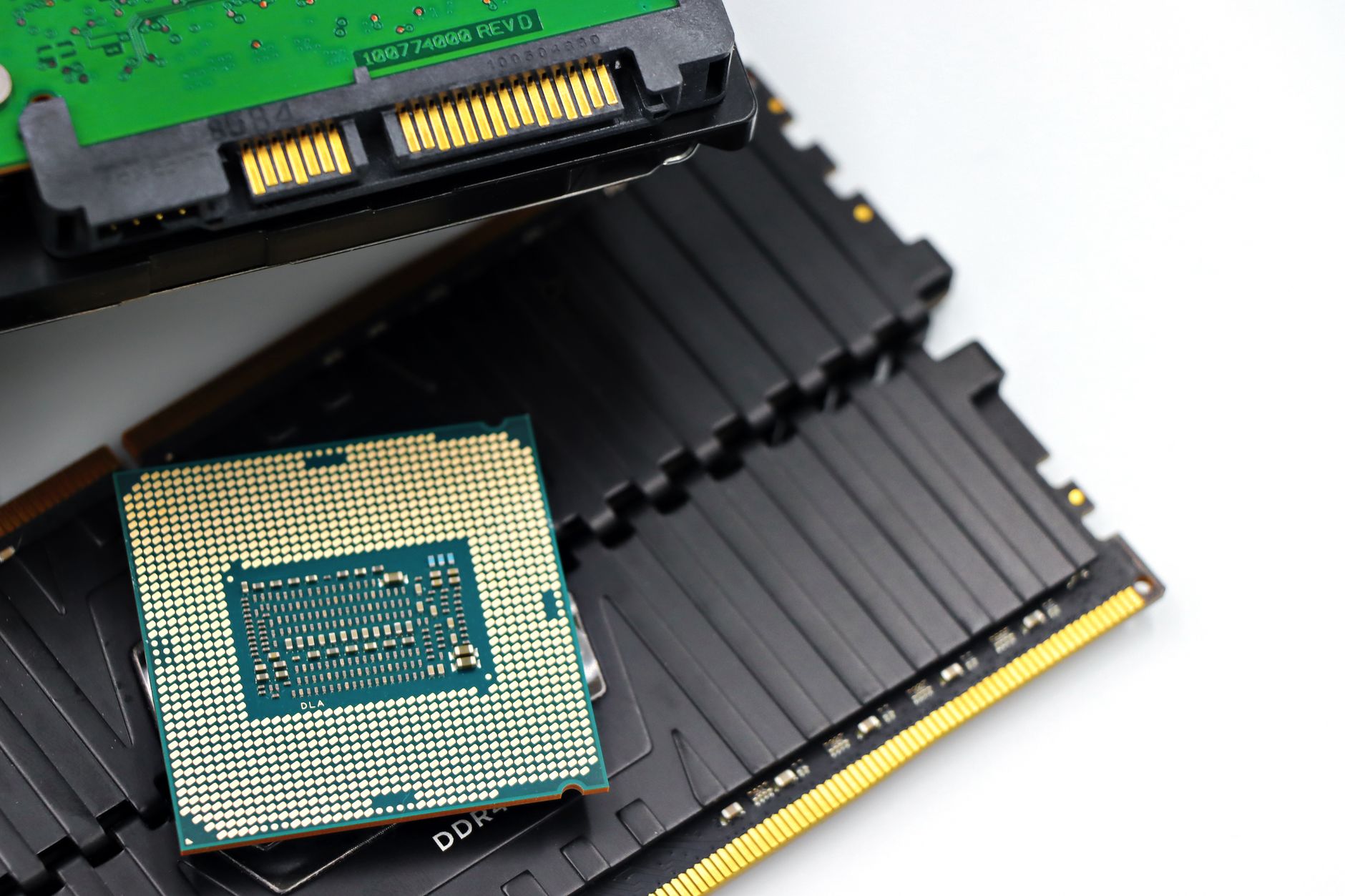
The global digital landscape is currently undergoing a tectonic shift, driven by the relentless hunger for computational power. As we move through 2026, the "AI Gold Rush" has transitioned from a speculative frenzy into a fundamental restructuring of the global economy. For the Indian investor, watching the movement of the Nifty IT index or the Sensex provides a window into domestic tech growth, but a truly comprehensive strategy requires looking at the bedrock of this revolution: the semiconductor industry.
While Indian investors often focus on domestic software services, the hardware that powers these services—the silicon—is the true bottleneck of the AI era. To understand where the value lies, one must look toward the US-listed giants on the NYSE and Nasdaq that control the design, fabrication, and connectivity of the chips driving every Large Language Model (LLM) and generative AI tool today.
The Architecture of AI: Understanding the Semiconductor Value Chain
Before diving into specific companies, it is essential to understand that "semiconductors" is not a monolithic sector. The industry is divided into several specialized roles. When evaluating these stocks, an investor must distinguish between different layers of the supply chain:
- The Designers (Fabless): These companies design the complex architecture of the chips but do not own factories. They focus on intellectual property (IP) and software integration.
- The Manufacturers (Foundries): These are the giants with massive capital expenditure (CapEx) who actually print the silicon on wafers.
- The Connectivity & Networking Providers: These companies create the "highways" that allow thousands of chips to talk to each other in massive data centers.
For an Indian investor looking to diversify via a US brokerage account (under the RBI LRS framework) or through GIFT City-based structures, understanding these distinctions is vital. If a company has high intellectual property moats but lacks manufacturing capacity, its success is heavily dependent on its suppliers.
TSMC: The World's Foundry and the Critical Bottleneck
Taiwan Semiconductor Manufacturing Company (TSMC) is arguably the most important company in the modern world. While it is a Taiwanese company, its massive scale and technological lead make it a cornerstone of the global tech ecosystem, with significant implications for US-listed tech giants.
The "Moat" of Advanced Nodes
As we progress through 2026, the race for sub-2nm process technology has become the ultimate battlefield. TSMC holds a near-monopoly on the most advanced manufacturing nodes. When companies like Apple, Nvidia, or AMD design a revolutionary new chip, they almost all rely on TSMC's precision to actually build it.
How to evaluate TSMC's role:
- Capital Intensity: Manufacturing chips is incredibly expensive. Investors should look at TSMC's CapEx (Capital Expenditure) trends. High CapEx indicates they are investing heavily in future technology, which is necessary to stay ahead but can pressure short-term cash flows.
- Geopolitical Risk Premium: Because TSMC operates in a sensitive geopolitical region, its stock often carries a "risk premium." Indian investors should monitor how geopolitical tensions might impact supply chain stability.
- Utilization Rates: A high utilization rate in TSMC's fabs suggests that demand for AI chips is still outstripping supply, a key indicator of sector health.
AMD: The Challenger in the GPU and CPU Arena
While some companies focus on manufacturing, Advanced Micro Devices (AMD) is a prime example of a "fabless" powerhouse. AMD has successfully carved out a significant market share in both the consumer PC market and, more importantly, the high-performance computing (HPC) market.
The Battle for AI Acceleration
In 2026, the competition in the AI accelerator space is fierce. AMD's Instinct series of GPUs is designed to compete directly with the industry leaders. When evaluating AMD, one shouldn't just look at total revenue, but rather the Data Center segment growth.
Key metrics for the AMD investor:
- Market Share Gains: How much of the AI training and inference market is AMD capturing from incumbent leaders?
- Product Roadmap Execution: How effectively can AMD transition its architectures to support the next generation of AI workloads?
- Margin Expansion: As AMD moves from selling general-purpose CPUs to high-margin AI accelerators, look for improvements in their gross margins.
For an investor using the Downstox terminal to track global trends, watching the correlation between AMD's stock price and the broader Nasdaq 100 can provide insights into how US tech sentiment is shifting.
Broadcom: The Connectivity King of the Data Center
If TSMC is the factory and AMD is the brain, Broadcom (AVGO) is the nervous system. As AI models grow larger, they require massive clusters of GPUs working in perfect synchronicity. This requires incredibly sophisticated networking hardware and custom silicon (ASICs).
Custom Silicon and Networking Dominance
Broadcom has a unique position in the market. They don't just sell off-the-shelf chips; they help hyperscalers (like Google or Meta) design their own custom AI chips. This makes Broadcom deeply integrated into the long-term infrastructure plans of the world's largest companies.
Factors to consider when analyzing Broadcom:
- Diversified Revenue Streams: Unlike pure-play semiconductor firms, Broadcom has significant software and networking segments that provide a cushion during semiconductor cyclicality.
- Custom Silicon Demand: As more companies try to build their own AI hardware to reduce dependency on others, Broadcom's custom ASIC business stands to benefit.
- Dividend Growth: Historically, Broadcom has been known for its shareholder returns. For an Indian investor looking for "growth at a reasonable price," Broadcom's ability to balance growth with dividends is a key metric.
Integrating US Tech into an Indian Portfolio
For an Indian investor, diversifying into US semiconductor stocks isn't just about chasing the next "hot" stock; it's about gaining exposure to the fundamental drivers of the digital economy. However, this must be done strategically.
Practical Strategies for Diversification
- The Indirect Route (Mutual Funds): If you prefer not to manage individual US stocks, many Indian Mutual Funds offer "International Funds" or "Feeder Funds" that invest in US tech. You can use the Downstox Mutual Fund Screener to find funds with high exposure to the technology sector.
- The Direct Route (US Brokerage/LRS): Using the Liberalised Remittance Scheme (LRS), you can invest directly in NYSE or Nasdaq-listed stocks. This allows for precise selection (e.g., choosing AMD over a broad index), but it requires understanding currency fluctuations (USD vs. INR).
- The Hybrid Approach: Many investors hold domestic "Blue Chip" stocks on the NSE (like Tata Elxsi or Infosys) to capture Indian tech growth, while using US exposure to capture the "foundational" hardware layer.
Risk Management and Tools
Investing in semiconductors involves high volatility. These stocks are often "cyclical," meaning they go through periods of extreme boom and extreme bust.
- Use a Screener: Don't just look at price. Use a screener to look at Debt-to-Equity ratios and Free Cash Flow. In a high-interest-rate environment, companies with massive debt can struggle even if their technology is superior.
- Portfolio X-Ray: If you are holding both Indian and US tech, use a Portfolio X-Ray tool to ensure you aren't "over-concentrated." If your Indian portfolio is 50% IT and your US portfolio is 50% Semiconductors, you are essentially making a single bet on the tech sector. Diversification requires balancing these exposures.
Summary Comparison for the Informed Investor
| Feature | TSMC | AMD | Broadcom |
|---|---|---|---|
| Primary Role | Manufacturer (Foundry) | Designer (Fabless) | Designer & Networking |
| Key Driver | Global Chip Demand | AI GPU Market Share | Custom AI Silicon & Networking |
| Main Risk | Geopolitical Tension | Intense Competition | Cyclicality in Hardware |
| Market Focus | Manufacturing Capacity | Compute & Graphics | Connectivity & Infrastructure |
Conclusion
The semiconductor industry is the engine of the 2026 economy. Whether it is the manufacturing prowess of TSMC, the design innovation of AMD, or the connectivity dominance of Broadcom, these companies represent the essential building blocks of the AI era.
For the Indian investor, the key is to move beyond the hype and analyze the specific role each company plays in the supply chain. Are they the makers, the thinkers, or the connectors? By understanding these roles and using tools like a screener to monitor fundamental health, you can better navigate the complexities of the US-listed semiconductor sector.
Always remember that while the potential for growth in AI is immense, the volatility inherent in the semiconductor cycle requires a disciplined, long-term perspective rather than chasing short-term price movements.
This article is for information and education only. Downstox is not a SEBI-registered Research Analyst or Investment Adviser and this is not investment advice. Markets carry risk; consult a SEBI-registered adviser before investing.
For information and education only. This article is for information and education only. Downstox is not a SEBI-registered Research Analyst or Investment Adviser, and nothing here is investment advice or a recommendation to buy or sell any security. Any views or calls attributed to third parties are theirs, not Downstox's. Markets carry risk; consult a SEBI-registered adviser before investing.
Downstox US Markets Desk
US & Global Equities Desk · US equities · S&P 500 · Nasdaq
US stocks for Indian investors - S&P 500, Nasdaq, AI and semis, big tech, and how to access them from India.
View Downstox US Markets Desk's profile →Get weekly market insights delivered free
Curated Indian market analysis, every Sunday morning. Written by traders, for traders.
Join 10,000+ Indian traders. No spam. Unsubscribe anytime.
Related reads
More in us markets →
Dentsply Sirona vs Peers: Q1 2026 Dental Tech Review

Understanding the Magnificent Seven: US Big Tech for Indian Investors

Nasdaq 100 Forecast: QQQ falls amid a rotation out of tech

Best Free Trading Tools for Indian Retail Investors in 2026