Will Bitcoin Crash to $50,000? Impact on Indian Markets Explained
Explore how a Bitcoin dip to $50,000 could affect Nifty, Sensex and crypto‑linked Indian stocks like TCS and Infosys. Get a practical framework for investors.
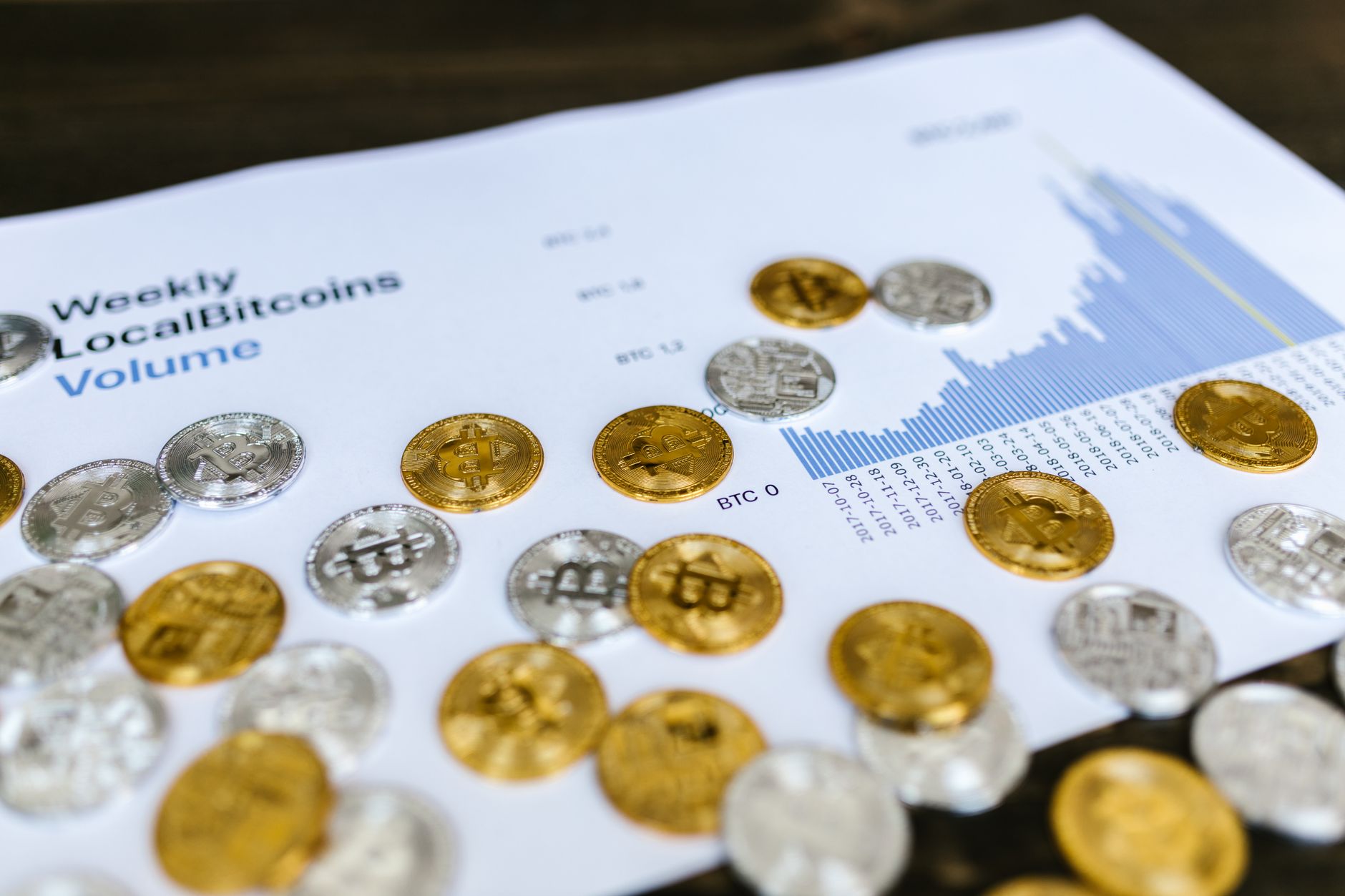
Bitcoin's price swings have become a regular talking point in Indian trading circles, especially as more retail investors look beyond the Nifty and Sensex for diversification. The question on many minds today is simple yet loaded: Will Bitcoin (BTC) crash to $50,000? While no one can predict the future with certainty, we can dissect the forces that drive BTC's valuation, examine historical patterns, and lay out a practical framework for Indian stock-market participants to navigate the volatility.
1. Why Bitcoin's Price Matters to Indian Investors
Even though Bitcoin is not listed on Indian exchanges like the NSE or BSE, its ripple effects touch domestic markets in several ways:
- Correlation with risk-on assets – During periods of global risk appetite, BTC often moves in tandem with emerging-market equities, including Indian stocks. A sharp BTC sell-off can trigger risk-off sentiment, pulling down the Nifty and Sensex.
- Exposure through related stocks – Companies with blockchain or crypto-related businesses (e.g., Tata Consultancy Services' blockchain initiatives, Infosys' digital assets practice, or newer fintech firms) may see their share prices react to BTC moves.
- Alternative allocation – Many Indian investors now treat a small slice of their portfolio (1-5 %) as a "digital gold" hedge against inflation or currency depreciation. Understanding where BTC might head helps size that slice appropriately.
- Regulatory signals – SEBI's stance on crypto-related products, RBI's cautions, and the upcoming Cryptocurrency and Regulation of Official Digital Currency Bill influence market sentiment and can cause abrupt price swings.
Keeping an eye on BTC therefore isn't just about chasing a speculative token; it's about gauging broader market risk and identifying opportunities (or threats) in the Indian equity landscape.
2. Historical Price Cycles: Lessons from Past Peaks and Troughs
Bitcoin's price history is marked by roughly four-year cycles tied to its halving events, when the block reward for miners is cut in half. Each cycle has shown a similar pattern:
| Cycle | Halving Date | Approx. Peak (USD) | Approx. Trough (USD) | Duration (months) |
|---|---|---|---|---|
| 1 | Nov 2012 | $1,150 (Dec 2013) | $200 (Jan 2015) | 25 |
| 2 | Jul 2016 | $19,700 (Dec 2017) | $3,200 (Dec 2018) | 29 |
| 3 | May 2020 | $68,900 (Nov 2021) | $15,500 (Jun 2022) | 30 |
| 4 | Apr 2024* | ? | ? | TBD |
*The next halving is expected around April 2024.
What the cycles teach us:
- After each halving, BTC typically enters a bull phase lasting 12-18 months, driven by reduced supply growth and rising demand.
- The subsequent bear phase can see prices retreat 70-85 % from the peak before stabilising.
- Macro shocks (e.g., COVID-19 crash, US rate hikes, geopolitical tensions) can amplify or dampen these moves, but the underlying supply-demand rhythm remains a strong backbone.
If we map the current cycle (post-May 2020 halving) onto this template, the November 2021 peak of ~$69k fits the bull phase. The subsequent decline to the $15k-$20k zone in mid-2022 resembled a classic bear trough. Since then, BTC has been grinding higher, forming a re-accumulation range between roughly $25k and $35k through most of 2023.
A move down to $50k would represent a ~30 % correction from the current ~$70k level (as of early Nov 2025) – a pullback that, while painful, is well within the historical range of intra-cycle corrections. In fact, during the 2020-2021 bull run, BTC suffered multiple 20-30 % dips (e.g., March 2020 crash to $3.8k, May 2021 dip to $30k) before resuming its ascent.
3. Macro Drivers That Could Push BTC Toward $50k
3.1 Global Liquidity and Interest Rates
- U.S. Federal Reserve policy – When the Fed tightens (higher rates, quantitative tightening), global risk assets often face headwinds. Bitcoin, despite its "non-correlated" narrative, has shown a noticeable negative correlation with the U.S. 10-year Treasury yield in recent years. A sustained rise in yields above 4.5 % could drain speculative capital from crypto.
- Dollar strength – A stronger USD makes BTC more expensive for holders of other currencies, potentially reducing demand. The USD Index (DXY) crossing the 105-110 zone has historically coincided with BTC pullbacks.
3.2 Inflation and Real Yields
- Real yields (nominal yield minus inflation) – When real yields become attractive, investors shift toward traditional safe havens (e.g., TIPS, gold) and away from non-yielding assets like BTC.
- Indian CPI trends – Persistent retail inflation above 6 % in India keeps RBI's policy rates elevated, which can spill over to global risk sentiment via capital flows.
3.3 Regulatory Developments in India
- SEBI's stance on crypto-related products – While SEBI has not approved spot Bitcoin ETFs, it has allowed mutual funds to invest in overseas crypto-focused funds under strict limits. Any tightening (e.g., caps on foreign crypto exposure) could reduce institutional inflow from Indian investors.
- RBI's digital rupee (e₹) pilot – A successful rollout of a central bank digital currency could divert some speculative interest away from private cryptocurrencies, especially if the e₹ offers programmable features and seamless integration with UPI.
- Taxation – The 30 % tax on crypto gains plus 1 % TDS (effective FY 2022-23) already dampens trading activity. Any further increase in reporting burdens could push retail traders toward offshore exchanges, reducing on-chain liquidity visible to Indian platforms.
3.4 Geopolitical and Macro Shocks
- Oil price spikes – Higher energy costs can fuel inflation, prompting tighter monetary policy globally.
- China's crypto stance – Periodic crackdowns on mining or trading in China still affect global hash rate and miner revenue, influencing BTC's supply dynamics.
- Black-swan events – Pandemic resurgences, major cyber-attacks on exchanges, or sovereign debt crises can trigger sudden risk-off moves.
If a confluence of these factors materialises — say, the Fed holds rates high for longer, the USD remains strong, Indian inflation stays sticky, and SEBI tightens crypto exposure limits — a technical break below the $55k-$60k support zone could open the path to the psychologically important $50k level.
4. Technical Analysis: Key Levels to Watch
4.1 Price Structure on the Daily Chart
- Major resistance: The $72k-$75k zone (re-test of the November 2021 high) has acted as a ceiling twice in 2024-25. Failure to break and hold above this area keeps the bias neutral-to-bearish.
- Intermediate support: The $60k-$62k band aligns with the 50-day exponential moving average (EMA) and the 61.8 % Fibonacci retracement of the March 2024-July 2024 rally. A clean break below this band often precedes deeper corrections.
- Critical support: The $50k-$52k region corresponds to the 200-day EMA (currently hovering around $51k) and the 78.6 % Fibonacci retracement of the 2020-2021 bull run. Historically, BTC has found buying interest near the 200-day EMA during bear phases.
4.2 Momentum Oscillators
- RSI (14) – Readings below 30 signal oversold conditions; above 70 indicate overbought. In the last six months, BTC's RSI has oscillated between 45 and 55, reflecting a lack of strong directional momentum. A dip below 30 while price is near $55k would heighten the odds of a further slide toward $50k.
- MACD – The MACD line crossing below the signal line, coupled with a negative histogram, has preceded each of the last three 20-%+ corrections. Watch for a bearish crossover when price is under the $62k EMA.
4.3 Volume Profile
- High-volume nodes – The most traded price bands over the past year sit around $48k-$52k and $63k-$66k. A break below the lower node with rising volume suggests genuine seller pressure rather than a shallow wick.
Practical tip for Indian traders: Use the Downstox Terminal to overlay these indicators on BTC-USD charts (available via the platform's crypto widget). Set alerts for:
- Price crossing below $62k (EMA breach)
- RSI dropping below 30
- MACD bearish crossover
When any two of these trigger simultaneously, consider tightening stop-losses or reducing exposure.
5. On-Chain Metrics and Sentiment Gauges
5.1 Miner Activity
- Hash rate – A declining hash rate can signal miner capitulation, often preceding price bottoms. Conversely, a rising hash rate indicates confidence in future profitability.
- Miner reserve – When miners move BTC from wallets to exchanges, it may hint at impending selling pressure.
5.2 Exchange Flows
- Net inflow/outflow – Sustained net inflows to exchanges (more BTC deposited than withdrawn) often precede short-term tops, as traders prepare to sell. Net outflows suggest accumulation.
5.3 Holder Composition
- Long-term holder (LTH) supply – The proportion of BTC held for >155 days has risen to ~70 % in late 2025, indicating a strong base of conviction investors. A sharp drop in LTH supply would be a red flag.
- Whale activity – Large transactions (>1,000 BTC) tracked via services like WhaleAlert can foreshadow moves. A cluster of whale deposits to exchanges often aligns with short-term tops.
5.4 Market Sentiment
- Fear & Greed Index – Values below 30 (extreme fear) have historically coincided with buying opportunities, while readings above 80 (extreme greed) often precede corrections.
- Google Trends & Social Volume – Spikes in Bitcoin-related searches on Indian platforms (e.g., Twitter, Reddit's r/IndiaInvestments) can reflect retail frenzy.
How Indian investors can use this: The Downstox Portfolio X-Ray tool lets you tag crypto-related holdings (e.g., stocks of blockchain firms, crypto-focused mutual funds) and view their aggregate exposure. Pair that with on-chain data from free sites like Glassnode or CryptoQuant to decide whether to increase, hold, or trim your crypto allocation.
6. Actionable Strategies for Indian Stock-Market Investors & Traders
Below are concrete steps you can take today, whether you're a long-term investor building a core portfolio or an active trader looking to capture short-term swings.
6.1 Define Your Bitcoin Allocation
- Rule of thumb – Limit crypto to 5 % of your total investable surplus if you have a moderate risk appetite. Aggressive traders might go up to 10 %, while conservative investors may stay under 2 %.
- Rebalance quarterly – If BTC's price moves sharply, your allocation will drift. Use the Downstox Mutual Fund Screener to identify low-cost index funds or ETFs that can serve as a counter-weight (e.g., Nifty 50 Index Fund, Sensex ETF). When BTC exceeds your target, sell a portion and reinvest the proceeds into these equity funds to maintain balance.
6.2 Use Systematic Entry (SIP-Style)
- Instead of trying to time the bottom, consider a Bitcoin SIP: allocate a fixed INR amount (say, ₹5,000) every week or month into BTC via a trusted global exchange that supports INR deposits (e.g., WazirX, CoinDCX).
- This approach smooths out entry price and reduces the emotional impact of volatility.
6.3 Hedge with Correlated Assets
- Gold – Historically, gold and BTC have shown a low-to-moderate negative correlation during risk-off periods. Holding a small gold ETF (e.g., Nippon India Gold ETF) can offset some BTC downside.
- Dollar-cost averaging into USD-denominated assets – If you expect the USD to strengthen, consider holding a portion of your portfolio in US-dollar-denominated Indian equities with strong export earnings (e.g., IT services firms like TCS, Infosys). A stronger USD can boost their revenues, partially offsetting BTC losses.
6.4 Leverage Downstox Tools for Stock-Level Exposure
- Screener for blockchain-related stocks – Build a custom screen:
- Sector: Information Technology
- Keywords: "blockchain", "digital assets", "crypto" in business description
- Market cap: >₹5,000 Cr (to avoid illiquid penny stocks)
- Result: You might discover firms like LTI Mindtree (blockchain practice), Tech Mahindra (crypto-consulting), or newer fintechs such as Razorpay (exploring crypto payments).
- Terminal for real-time news – Set up a watchlist for these stocks and enable news alerts. When SEBI or RBI releases a statement on crypto, you'll see immediate price reactions in these counters, allowing you to act swiftly.
- Portfolio X-Ray – After adding any blockchain stocks, run an X-Ray to see sector concentration. If your crypto exposure via equities rises above, say, 15 % of your equity portfolio, consider trimming to avoid over-concentration.
6.5 Risk Management Tactics
- Stop-loss based on volatility – Use the Average True Range (ATR) of BTC (e.g., 14-day ATR ≈ $1,500). A sensible stop-loss for a long position could be entry price minus 2×ATR.
For information and education only. This article is for information and education only. Downstox is not a SEBI-registered Research Analyst or Investment Adviser, and nothing here is investment advice or a recommendation to buy or sell any security. Any views or calls attributed to third parties are theirs, not Downstox's. Markets carry risk; consult a SEBI-registered adviser before investing.
Downstox Macro Desk
Macro & Policy Desk · RBI monetary policy · Indian fiscal policy · GST
RBI, Centre policy, FX, FII flows, global macro spillover into Indian markets.
View Downstox Macro Desk's profile →Get weekly market insights delivered free
Curated Indian market analysis, every Sunday morning. Written by traders, for traders.
Join 10,000+ Indian traders. No spam. Unsubscribe anytime.
Related reads
More in market analysis →Impact of SHANTI Framework on Private Nuclear Energy in India
Nifty 50 and Sensex Outlook for 18 August 2026

MCX in Top Mutual Fund Portfolios: Signal or Crowded Trade?

MAN Industries Expansion Plans: Saudi Revenue Outlook 2026
Swing Trading Outlook for Indian Equity Markets: August 2026