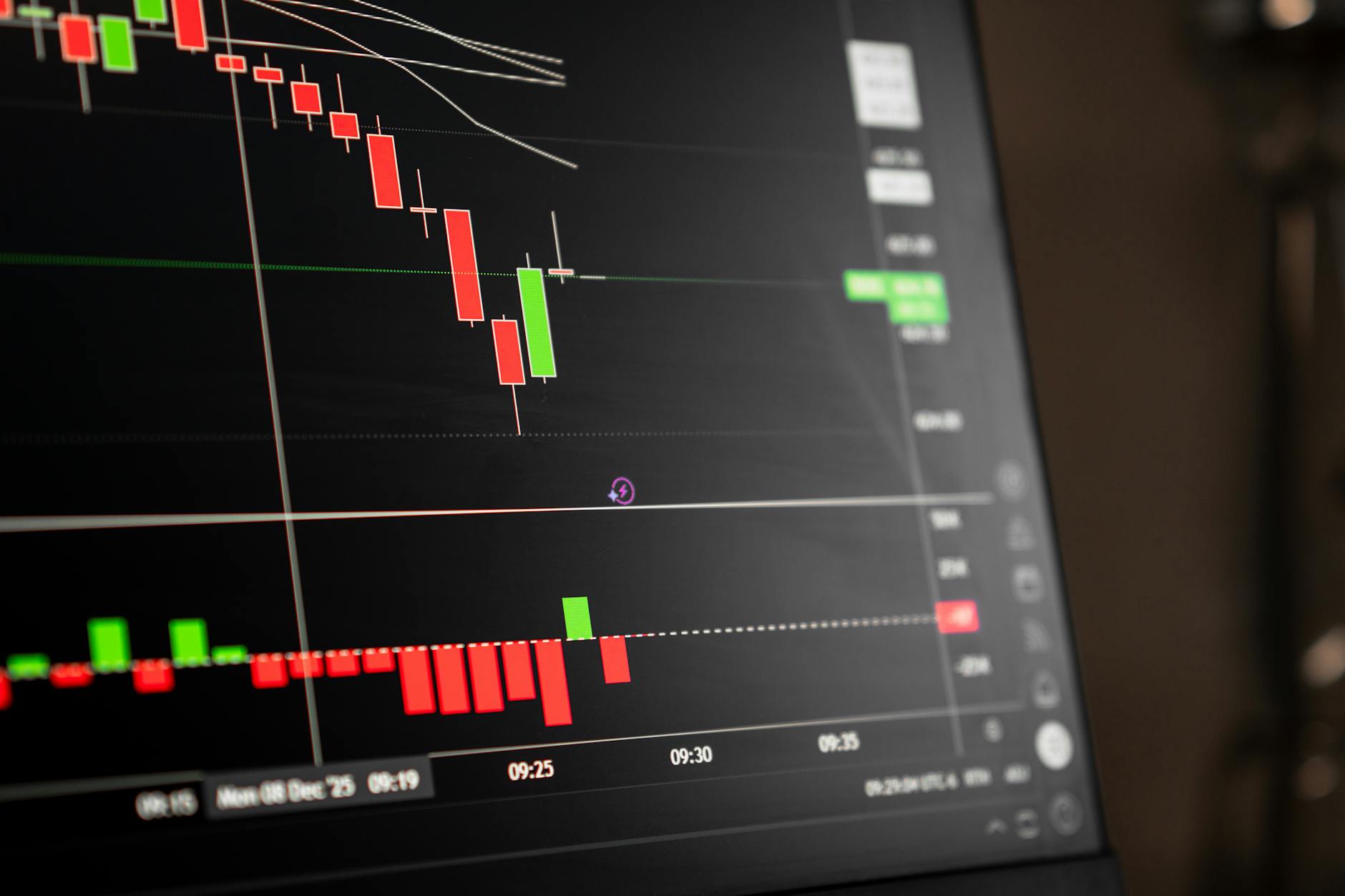
Nifty 50 & Bank Nifty Today: Data‑Driven Prediction & Key Levels
Get a data‑driven outlook on Nifty 50 and Bank Nifty for today, with technical levels, sector themes and actionable tips using Downstox tools.

The Indian equity markets have been buzzing with activity as investors digest a mixed bag of domestic earnings, global cues, and policy signals. Whether you are a day-trader watching the tick-by-tick moves on Nifty 50 or a medium-term investor building a core portfolio around Bank Nifty, having a clear, data-driven view of today's landscape can make the difference between chasing noise and capturing genuine opportunity. In this article we break down the key drivers shaping the Nifty 50 and Bank Nifty, outline practical technical levels to watch, highlight sectoral themes that are gaining traction, and show how you can leverage Downstox's suite of tools—screener, terminal, portfolio X-Ray, and mutual fund screener—to turn insight into action.
Understanding Today's Market Pulse
Before diving into charts, it helps to step back and gauge the overall sentiment that is setting the tone for the session.
- Domestic macro backdrop – India's Q2 FY24 GDP print came in at 6.3% YoY, slightly ahead of consensus, while core inflation remained sticky at 5.2% (CPI). The RBI's recent policy stance remains "neutral-to-hawkish", keeping the repo rate at 6.50% and signaling that any further tightening will be data-dependent.
- Global cues – US Treasury yields have steadied around 4.30% after the Fed's latest minutes hinted at a possible pause in rate hikes. Crude oil, a key import for India, is trading near $84/bbl, providing some relief to the current account deficit.
- FII/DII flows – Foreign Institutional Investors have been net buyers of ~₹4,200 crore in the last five trading sessions, while Domestic Institutional Investors continue to sip liquidity via systematic equity plans (SEPs). This dual inflow has provided a floor to the benchmark indices.
- Market breadth – The advance-decline ratio on the NSE is hovering around 1.15:1, indicating that more stocks are advancing than declining, a healthy sign for sustained upside.
All these factors together suggest a cautiously optimistic bias for the day, with the potential for short-term pull-backs if any surprise emerges from the RBI's monetary policy minutes or geopolitical flashpoints.
Technical Outlook for Nifty 50
Key Levels to Watch
| Level | Significance | Current Price (approx.) | Actionable Insight |
|---|---|---|---|
| 22,050 | Immediate resistance (previous swing high) | 22,020 | A break above with volume > 1.2× average could target 22,200–22,350. |
| 21,800 | Psychological support & 20-day EMA | 21,850 | Hold long positions if price stays above; a slip below invites a test of 21,600. |
| 21,600 | Strong support (50-day SMA + Fibonacci 61.8% retracement) | — | Consider adding to longs on a bounce with bullish candlestick patterns (e.g., hammer, engulfing). |
| 22,300 | Upper band of the daily Bollinger Band (20, 2) | — | If reached, watch for overbought RSI (>70) and be ready to book partial profits. |
Intraday Trading Ideas
- Breakout Long – If Nifty 50 clears 22,050 on a 15-minute candle with volume surge, enter a long position with a stop-loss at 21,950 (just below the breakout point) and target 22,200 (first resistance) then 22,350.
- Pull-back to EMA – On a mild dip towards 21,800, look for bullish reversal patterns (e.g., bullish engulfing) on the 5-minute chart. Entry near 21,810 with stop-loss at 21,750 and target 22,050.
- Counter-trend Short – Should the index fail to sustain above 22,050 and show bearish divergence on RSI, consider a short near 22,040 with stop-loss at 22,120 and target 21,800.
Using Downstox Terminal
The Downstox Terminal offers real-time depth, advanced charting (including multiple time-frame overlays), and one-click order placement. You can set up a custom watchlist for Nifty 50 futures, add the 20-day EMA, Bollinger Bands, and RSI, and create alerts that trigger when price crosses 22,050 or RSI exceeds 70. This reduces the need to constantly stare at the screen and lets you act swiftly when the conditions align.
Bank Nifty Dynamics
Bank Nifty, being more sensitive to interest-rate expectations and credit growth, often exhibits sharper moves than the broader Nifty 50.
Current Technical Setup
- Trend – The index is trading in a rising channel, with the lower trend line around 44,200 and the upper trend line near 45,200.
- Key Resistances – 44,800 (previous high), 45,000 (psychological barrier), 45,200 (upper channel).
- Key Supports – 44,200 (lower channel), 44,000 (20-day EMA), 43,800 (50-day SMA).
Fundamental Drivers
- Credit Growth – RBI's latest data shows bank credit YoY growth at 15.4%, driven by retail and MSME loans. Healthy credit expansion supports bank earnings.
- NIM Pressure – Net Interest Margins have been under slight pressure due to rising deposit costs, but banks with strong CASA ratios (e.g., HDFC Bank, ICICI Bank) are better positioned.
- Asset Quality – Gross NPAs for the sector have declined to 3.2% (down from 3.8% a quarter ago), indicating improving loan books.
Actionable Trade Ideas
- Long on Breakout – If Bank Nifty clears 44,800 on a 30-minute candle with volume > 1.3× average, enter long with stop-loss at 44,600 and target 45,200 (channel top) then 45,500 (next resistance).
- Buy the Dip – On a pull-back to 44,200–44,300, look for bullish candlestick patterns and consider a long with stop-loss just below 44,100 and target 44,800.
- Short on Failure – Should the index reject at 45,000 twice with bearish engulfing candles, consider a short near 44,950 with stop-loss at 45,100 and target 44,500.
Leveraging Downstox Screener
The Downstox Screener lets you filter banking stocks based on parameters like CASA ratio > 40%, ROE > 12%, and NPA < 3%. You can create a custom screen titled "Bank Nifty Quality" and add the resulting tickers to your watchlist. This helps you quickly identify which individual banks are driving the index move—useful for both index-based trades and stock-specific strategies.
Macro Factors & Global Cues
Domestic Policy Watch
- RBI Minutes – The forthcoming monetary policy minutes (released every two weeks) often contain hints about future rate trajectories. A dovish tilt can spark a rally in rate-sensitive sectors like banks and real estate.
- Fiscal Stimulus – The government's continued focus on capex (₹10 lakh crore allocated for infrastructure in FY24) supports demand for cement, steel, and capital goods, indirectly boosting bank lending.
International Influences
- US Dollar Index (DXY) – A weaker DXY (currently around 103) tends to lift emerging market equities, including India, as foreign capital finds better risk-adjusted returns elsewhere.
- Commodity Prices – Apart from crude, watch base metals (copper, aluminum) as they reflect global industrial demand. A rise in copper prices often correlates with optimism about manufacturing, benefiting sectors like autos and industrials.
- Geopolitical Tensions – Any escalation in the Middle East or Eastern Europe can spike oil prices, hurting India's current account and putting pressure on the rupee. Keep an eye on Brent crude updates; a move above $90/bbl may warrant a defensive tilt.
Practical Example
Suppose the RBI minutes signal a pause in rate hikes and the US Fed hints at a possible cut in Q2 2025. Historically, such a combination has led to a 2-3% rally in Bank Nifty within the next two trading sessions. You could pre-position a small portion of your capital (say 10% of your trading allocation) in Bank Nifty futures or a liquid ETF like Nifty Bank ETF with a stop-loss at the recent swing low, aiming to capture the short-term upside while keeping risk limited.
Sectoral Rotation & Stock Picks
While indices give the broad direction, sectoral rotation often creates alpha opportunities. Below are three themes that are gaining traction today, along with concrete stock examples and how to act on them.
1. Defensive Consumption (FMCG & Staples)
- Why – Inflation remains moderate, and rural demand is showing signs of recovery after a decent monsoon. Companies with strong distribution networks and pricing power tend to outperform in uncertain macro environments.
- Picks – Hindustan Unilever (HUL), ITC, Nestle India.
- Action – Use the Downstox Screener to filter FMCG stocks with ROE > 15%, Dividend Yield > 1.5%, and Price-to-Earnings < 30. HUL currently trades at a P/E of 58, but its premium valuation is justified by consistent growth; consider a staggered buy on dips to 2,350 (support) with a target of 2,500.
2. Renewable Energy & Power
- Why – India's push for 500 GW renewable capacity by 2030 is driving capex in solar, wind, and transmission. Companies with strong order books and government contracts are seeing revenue visibility.
- Picks – Tata Power, Adani Green Energy, Suzlon Energy.
- Action – Look for stocks with Order Book > 2× FY24 revenue and Debt/Equity < 0.5. Tata Power's order book stands at ~₹1.2 lakh crore, providing a solid runway. A break above ₹260 (resistance) on volume could target ₹280–₹300.
3. Technology & Digital Services
- Why – Global IT spending is rebounding, and Indian IT firms are benefiting from higher deal sizes in cloud, AI, and cybersecurity. The rupee's relative stability also helps dollar-denominated revenues.
- Picks – TCS, Infosys, HCL Tech.
- Action – Screen for Revenue Growth (YoY) > 8%, Operating Margin > 20%, and PEG Ratio < 1.2. Infosys currently trades at a PEG of 1.0, making it attractive relative to peers. Consider buying on a dip to ₹1,450 (support) with a stop-loss at ₹1,400 and target ₹1,550.
Using Downstox Portfolio X-Ray
Once you have a list of candidate stocks, the Portfolio X-Ray tool helps you assess diversification, sector concentration, and risk metrics before you commit capital. For instance, if you already hold 30% of your portfolio in financial services, adding another bank stock may overexpose you to interest-rate risk. Portfolio X-Ray will flag this, allowing you to balance with an underweight sector like utilities or consumer discretionary.
Risk Management & Trading Strategies
No outlook is complete without a disciplined risk framework. Below are practical rules that work for both intraday traders and swing investors.
1. Position Sizing
- Rule of Thumb – Never risk more than 1-2% of your total trading capital on a single trade.
- Example – If your capital is ₹5 lakhs, a 1.5% risk translates to ₹7,500 per trade. For a Nifty 50 futures trade with a stop-loss of 100 points (₹25 per point × 50 = ₹1,250 per lot), you can take up to 6 lots (₹7,500/₹1,250 ≈ 6) while staying within the risk limit.
2. Stop-Loss Placement
- Technical Stops – Place stops just below a recent swing low (for longs) or above a swing high (for shorts). Avoid arbitrary round numbers; let the chart dictate the level.
- Volatility-Based Stops – Use the Average True Range (ATR) multiplier (e.g., 1.5× ATR) to set stops that adapt to market volatility. In a high-volatility session, ATR for Nifty 50 might be 80 points; a 1.5× multiplier gives a 120-point stop.
3. Profit Taking & Trailing Stops
- Partial Profits – Book 50% of the position at the first target (e.g., 22,200 for Nifty 50) and let the remainder run with a trailing stop.
- Trailing Stop Example – After entering a long at 22,020 with a target of 22,350, once the price hits 22,200, move the stop-loss to break-even (22,020) or to 22,100 to lock in gains while still allowing upside.
4. Hedging with Options
- For those comfortable with derivatives, buying a protective put (e.g., Nifty 50 22,000 put) can limit downside while preserving upside. The cost of the put is the premium; if the market stays above the strike, the put expires worthless, but you still benefit from the rally.
5. Daily Review Routine
- Pre-Market – Scan global cues, check overnight SGX Nifty, note any major news (RBI, macro data, earnings).
- In-Market – Use Downstox Terminal alerts for price/indicator triggers; keep a trading journal to note entry/exit rationale.
- Post-Market – Review performance against your plan, adjust stop-loss levels for overnight positions, and update your watchlist based on new sectoral developments.
Putting It All Together: A Sample Trading Plan for Today
Below is a concise, actionable plan that integrates the ideas discussed. Feel free to adapt the position sizes to your own capital and risk appetite.
| Instrument | Direction | Entry | Stop-Loss | Target 1 | Target 2 | Rationale |
|---|---|---|---|---|---|---|
| Nifty 50 Futures (Oct) | Long | 22,030 | 21,950 | 22,200 | 22,350 | Breakout above 22,050 with volume; bullish RSI (55) |
| Bank Nifty Futures (Oct) | Long | 44,750 | 44,600 | 45,000 | 45,200 | Anticipate RBI pause; strong support at 44,200 channel |
For information and education only. This article is for information and education only. Downstox is not a SEBI-registered Research Analyst or Investment Adviser, and nothing here is investment advice or a recommendation to buy or sell any security. Any views or calls attributed to third parties are theirs, not Downstox's. Markets carry risk; consult a SEBI-registered adviser before investing.
Downstox Markets Desk
Markets Desk · NSE · BSE · Nifty 50
Daily Indian-equities desk - Nifty, Sensex, sector wraps, technical analysis.
View Downstox Markets Desk's profile →Get weekly market insights delivered free
Curated Indian market analysis, every Sunday morning. Written by traders, for traders.
Join 10,000+ Indian traders. No spam. Unsubscribe anytime.
Related reads
More in technical analysis →
Understanding RSI Strategy for Indian Equity Markets in 2026

Understanding VWAP: How Institutional Traders Use This Metric

How to Start Investing in Indian Stock Market: A Complete Beginner Guide
UPL and Other Stocks Closing Above VWAP: Technical Analysis

ZEEL Breakout Signal: Stock Radar Reveals 2026 Rebound Potential