Why Most Indian Retail Traders Lose Money: The Psychology Behind It
Discover how trader psychology drives 90% of Indian retail investors into losses and learn actionable mental tricks to improve your NSE trading performance.
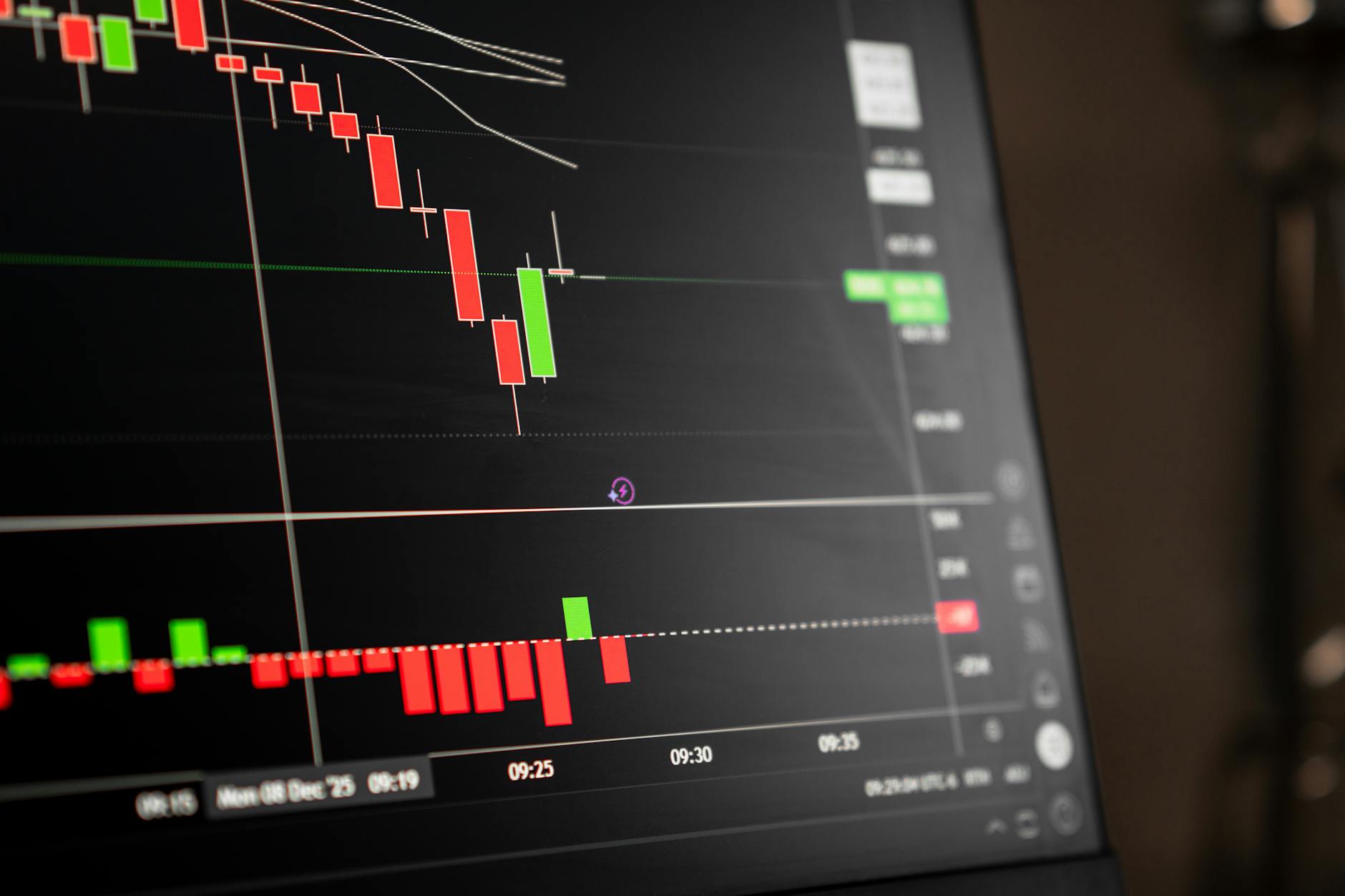
The Indian stock market has never been more accessible. With a smartphone, a Demat account, and a few clicks on platforms like Downstox, anyone can buy a share of Reliance, Tata Motors, or a hot IPO within minutes. Yet, despite the democratization of trading, a stark reality persists: approximately 90 % of retail traders end up losing money over the long run. The culprit is rarely a lack of knowledge about candlestick patterns or financial ratios; it is the psychology that drives every click, every stop-loss, and every impulsive chase after a rally.
Understanding why our brains sabotage us—and how to rewire those tendencies—can turn a losing streak into a sustainable edge. In this article we'll explore the mental traps that plague Indian traders, illustrate them with real-world NSE/BSE examples, and offer actionable steps you can start using today. We'll also show how Downstox's suite of tools—screener, terminal, portfolio X-Ray, and mutual fund screener—can be woven into a psychologically sound routine without feeling like a gimmick.
The Mindset Trap: Overconfidence and Illusion of Control
When a trader scores a few winning trades, the brain releases dopamine, reinforcing the belief that "I've got this." This overconfidence bias makes us think we can predict market moves better than we actually can. In the Indian context, it often shows up after a bullish phase in the Nifty 50 or after a successful IPO flip (think of the 2021 Zomato listing, where early buyers saw 30 % gains in a week).
Why it hurts
- Position sizing balloons – traders increase lot sizes, assuming the streak will continue.
- Stop-losses are ignored – "the stock will bounce back" becomes a mantra, leading to larger drawdowns.
- Information overload – we start chasing every tip on WhatsApp groups, believing we can filter noise better than the market.
Real-world example
During the March-April 2020 COVID crash, many retail traders who had profited from the 2019 rally doubled down on banking stocks (HDFC Bank, ICICI) as they fell, convinced the "buy the dip" rule would work again. The Nifty fell another 20 % before rebounding, wiping out months of gains for those who refused to cut losses.
Actionable antidote
- Pre-trade checklist – before entering any position, write down: entry price, target, stop-loss, and the reason (not just a feeling).
- Fixed risk per trade – cap each trade at 1-2 % of your total capital. Use Downstox's terminal to set conditional orders that automatically enforce this rule.
- Post-trade journal – log the outcome and note whether you followed the plan. Over time, patterns of overconfidence emerge and can be corrected.
Fear and Greed: The Emotional Rollercoaster of Nifty and Sensex
Fear and greed are the two primal forces that move markets, and they move traders even more violently. The Fear-Greed Index (often cited by financial news channels) spikes during events like the 2016 demonetisation, the 2020 pandemic crash, or the 2022-23 RBI rate-hike cycle.
How fear manifests
- Panic selling – seeing a red candle on the Nifty, traders liquidate positions at any price, locking in losses.
- Avoidance – after a loss, some traders stay out of the market for weeks, missing genuine recovery phases.
How greed manifests
- FOMO (Fear of Missing Out) – jumping into a stock that's already up 15 % in a day because "everyone's talking about it."
- Over-trading – taking multiple positions in a single session to chase quick profits, inflating transaction costs.
Indian market illustration
In October 2021, the Nifty surged past 18,000 on hopes of a strong Q2 earnings season. Retail traders flooded into mid-cap stocks like Adani Green and Tata Power, driven by greed. When the RBI hinted at tighter liquidity in November, fear took over, and the same stocks fell 10-15 % in a week, wiping out the gains of those who entered without a plan.
Practical steps to tame fear & greed
- Define a "cool-off" period – after a loss, wait 30 minutes before re-entering any trade. Use this time to breathe, review your journal, and check if the setup still meets your criteria.
- Use price alerts wisely – Downstox's terminal lets you set alerts at key support/resistance levels. Instead of staring at the screen, you get a notification only when the market reaches a point that matters to your plan.
- Adopt a "profit-taking rule" – for example, close 50 % of a position when it hits your first target, let the rest run with a trailing stop. This locks in gains and reduces the urge to let greed run wild.
Cognitive Biases that Sabotage Indian Traders
Beyond overconfidence and emotion, a suite of subtle biases quietly erodes performance. Recognizing them is the first step to neutralizing their impact.
1. Confirmation Bias
We seek information that validates our existing view and ignore contradictory data. A trader bullish on Infosys after a strong quarterly result may dismiss analyst downgrades or rising wage costs, focusing only on bullish tweets.
2. Anchoring
The first price we see becomes a mental anchor. If you bought Reliance Industries at ₹2,400 and it drops to ₹2,200, you may hold on hoping it returns to ₹2,400, even if fundamentals have changed.
3. Loss Aversion (Prospect Theory)
Losses hurt roughly twice as much as gains feel good. This leads to the "disposition effect": selling winners too early and holding losers too long.
4. Recency Bias
We give disproportionate weight to recent events. After a few days of Nifty gains, traders assume the trend will continue, ignoring longer-term cycles.
5. Herd Behavior
Seeing others buy a stock triggers a fear of missing out, leading to bubbles (e.g., the 2021-22 surge in certain penny stocks driven by Telegram groups).
Counter-measures (with Downstox integration)
- Contrarian screener – Downstox's screener lets you filter stocks with deteriorating fundamentals despite rising prices (high PE, falling ROE). Use it to spot potential over-hyped names.
- Data-driven checklists – before acting on a tip, run a quick fundamental scan (PE, debt/equity, promoter holding) via the screener. If the numbers don't support the story, pause.
- Visualize your anchor – in the portfolio X-Ray, view your average cost price alongside the current market price. The side-by-side view makes it harder to ignore the real-time P/L.
- Set automated rules – use the terminal's bracket order feature to pre-define profit targets and stop-losses, removing the need to make impulsive decisions in the heat of the moment.
The Role of Discipline: Building a Trading Plan that Works
A trading plan is the psychological seatbelt. It transforms abstract goals ("I want to make money") into concrete, repeatable actions. Discipline is not about suppressing emotions; it's about giving them a structured outlet.
Core components of a solid plan
| Component | What to decide | Example (Indian market) |
|---|---|---|
| Market selection | Which indices/sectors you'll trade | Nifty 50 for intraday, Bank Nifty for swing, select mid-caps for long-term |
| Timeframe | Intraday, positional, or investment | Intraday: 5-minute charts; Positional: daily/weekly |
| Entry criteria | Specific technical/fundamental triggers | RSI < 30 + bullish engulfing candle on Nifty futures |
| Exit criteria | Target profit, stop-loss, trailing rules | Target: 1.5× risk; Stop-loss: 1× risk; Trail after 1× profit |
| Position sizing | % of capital per trade | 1.5 % of equity per intraday trade |
| Review routine | Daily, weekly, monthly checks | End-of-day journal; weekly performance review; monthly strategy tweak |
How to stick to it
- Pre-market ritual – 15 minutes before market open, review your plan, check news (RBI policy, global cues), and set alerts in Downstox terminal.
- Post-market debrief – after close, log every trade: entry/exit, reason, emotion felt, and whether you followed the plan. Over weeks, you'll see patterns (e.g., "I exit early when I'm anxious").
- Accountability partner – share your journal with a trusted fellow trader or a mentor; the social pressure boosts adherence.
Real-world payoff
A trader who followed a strict 1 % risk rule on Nifty futures from Jan 2022 to Dec 2022 achieved a net return of ~12 %, despite the index being flat. The same trader, when deviating to chase a hot tip in March 2023, incurred a 6 % loss in two days—illustrating how discipline protects capital even in choppy markets.
Leveraging Technology: How Downstox Tools Can Aid Psychological Edge
Technology alone won't make you profitable, but when aligned with a sound mindset, it reduces friction and eliminates many psychological triggers.
Downstox Screener – Filtering Noise, Focusing on Signal
- Pre-built scans – "High delivery % + rising volume" helps spot genuine interest rather than rumor-driven spikes.
- Custom scans – combine fundamentals (ROE > 15 %, debt/equity < 0.5) with technicals (price above 20-day EMA) to generate a shortlist of high-conviction stocks.
- Psych benefit – by limiting your watchlist to, say, 10-15 stocks, you reduce the temptation to over-trade and the anxiety of missing out on dozens of tickers.
Downstox Terminal – Execution with Precision
- Bracket & cover orders – automatically attach stop-loss and target, removing the need to monitor the screen constantly.
- One-click trading – reduces hesitation; you execute the plan you've already validated.
- Charting tools – draw support/resistance, apply Fibonacci retracements, and set alerts that ping your phone or email. This turns abstract "feelings" into objective triggers.
Portfolio X-Ray – Holding Yourself Accountable
- Asset allocation view – see at a glance how much capital is in equities, derivatives, mutual funds, and cash. If equities creep beyond your defined limit (say 60 %), the X-Ray flags it, prompting a rebalance.
- Performance attribution – understand whether gains came from a few big winners or consistent small wins, guiding future position sizing.
- Risk metrics – portfolio beta, VaR, and sector exposure help you gauge whether you're inadvertently taking on too much market risk—a common source of fear-driven panic selling.
Mutual Fund Screener – For the Long-Term Investor Mindset
Even active traders need a core-satellite approach. Use the mutual fund screener to identify low-cost index funds (e.g., Nifty 50 ETF, Sensex Index Fund) for the "core" portion of your wealth. Knowing you have a diversified, low-maintenance base reduces the pressure to make every trade a home run, alleviating greed.
Practical workflow example
- Morning (8:45 am) – Run a Downstox screener for "Nifty 50 stocks with delivery > 70 % and price > 20-day EMA".
- Select 2-3 candidates – note entry, stop-loss (based on ATR), and target (2× risk).
- Place bracket orders in the terminal – set alerts for if the order isn't filled by 10:00 am.
- Mid-day check – only open the terminal if an alert fires; otherwise, focus on work.
- End of day – log trades in journal, review portfolio X-Ray for any drift in allocation, adjust next day's screener parameters if needed.
This loop keeps emotions in check: you act only when predefined conditions appear, and you review outcomes objectively.
Practical Daily Routines to Cultivate a Winning Trader's Mindset
Beyond tools and plans, daily habits shape the subconscious patterns that drive trading behavior.
1. Mindful Breathing (2-3 minutes)
Before the market opens, sit upright, inhale for 4 counts, hold 2, exhale for 6. This activates the parasympathetic nervous system, lowering the impulse-driven "fight-or-flight" reaction to a sudden price swing.
2. Visualization
Spend 30 seconds visualizing yourself following the plan: entering a trade calmly, respecting the stop-loss, and exiting at the target. Studies show mental rehearsal improves actual performance by priming neural pathways.
3. Physical Movement
A quick 5-minute stretch or walk after every trading hour prevents fatigue-induced errors. Physical activity also reduces cortisol, the stress hormone that amplifies fear.
4. Information Diet
Limit news consumption to two reliable sources (e.g., Moneycontrol, Bloomberg Quint) and avoid scrolling through unverified WhatsApp forwards. Set a specific "news window" (e.g., 8:30-9:00 am and 3:30-4:00 pm) to prevent reactive trading.
5. End-of-Day Gratitude & Review
Write down three things you did well today (e.g., "I respected my stop-loss on XYZ") and one improvement point. Ending on a positive note reinforces constructive behavior while still acknowledging growth areas.
6. Weekly "Psychology Audit"
Every Sunday, review your journal for recurring emotional triggers (e.g., "I exit early after a loss"). Identify the bias, note the situation, and devise a concrete counter-action for the coming week (e.g., "If I feel anxious after a loss, I will wait 20 minutes before looking at any chart").
Conclusion
Trading in the Indian stock market is as much a battle of the mind as it is a test of technical skill. Overconfidence, fear, greed, and a host of cognitive biases silently erode capital, turning even the most promising strategies into losses. By recognizing these psychological pitfalls, building a disciplined trading plan, and leveraging tools like Downstox's screener, terminal, portfolio X-Ray, and mutual fund screener, you can transform raw emotion into structured action.
Remember: the goal isn't to eliminate feelings—fear and excitement are natural—but to give them a framework that prevents them from dictating your trades. Small, consistent improvements in mindset compound over time, just like returns on a well-managed portfolio.
Start today: pick one bias you notice most in your own trading, implement a single counter-measure from this article, and track the impact over the next two weeks. The journey to profitable trading begins not with a new indicator, but with a clearer, calmer mind.
For information and education only. This article is for information and education only. Downstox is not a SEBI-registered Research Analyst or Investment Adviser, and nothing here is investment advice or a recommendation to buy or sell any security. Any views or calls attributed to third parties are theirs, not Downstox's. Markets carry risk; consult a SEBI-registered adviser before investing.
Downstox Markets Desk
Markets Desk · NSE · BSE · Nifty 50
Daily Indian-equities desk - Nifty, Sensex, sector wraps, technical analysis.
View Downstox Markets Desk's profile →Get weekly market insights delivered free
Curated Indian market analysis, every Sunday morning. Written by traders, for traders.
Join 10,000+ Indian traders. No spam. Unsubscribe anytime.
Related reads
More in beginner guide →
Understanding Quantum Computing Stocks: A 2026 Investor Guide

Free Trading Tools for Indian Retail Investors in 2026
Understanding Margin Trading Facility: An MTF Guide 2026
Fundamental vs Technical Analysis: A Guide for 2026 Investors

How to Start Investing in Indian Stock Market: A Complete Beginner Guide
