Can AI Predict Market Timing? Analyzing Recent Study Findings 2026
A new study explores whether AI and LLMs can consistently time market swings. Discover how algorithmic models impact quantitative finance in 2026.
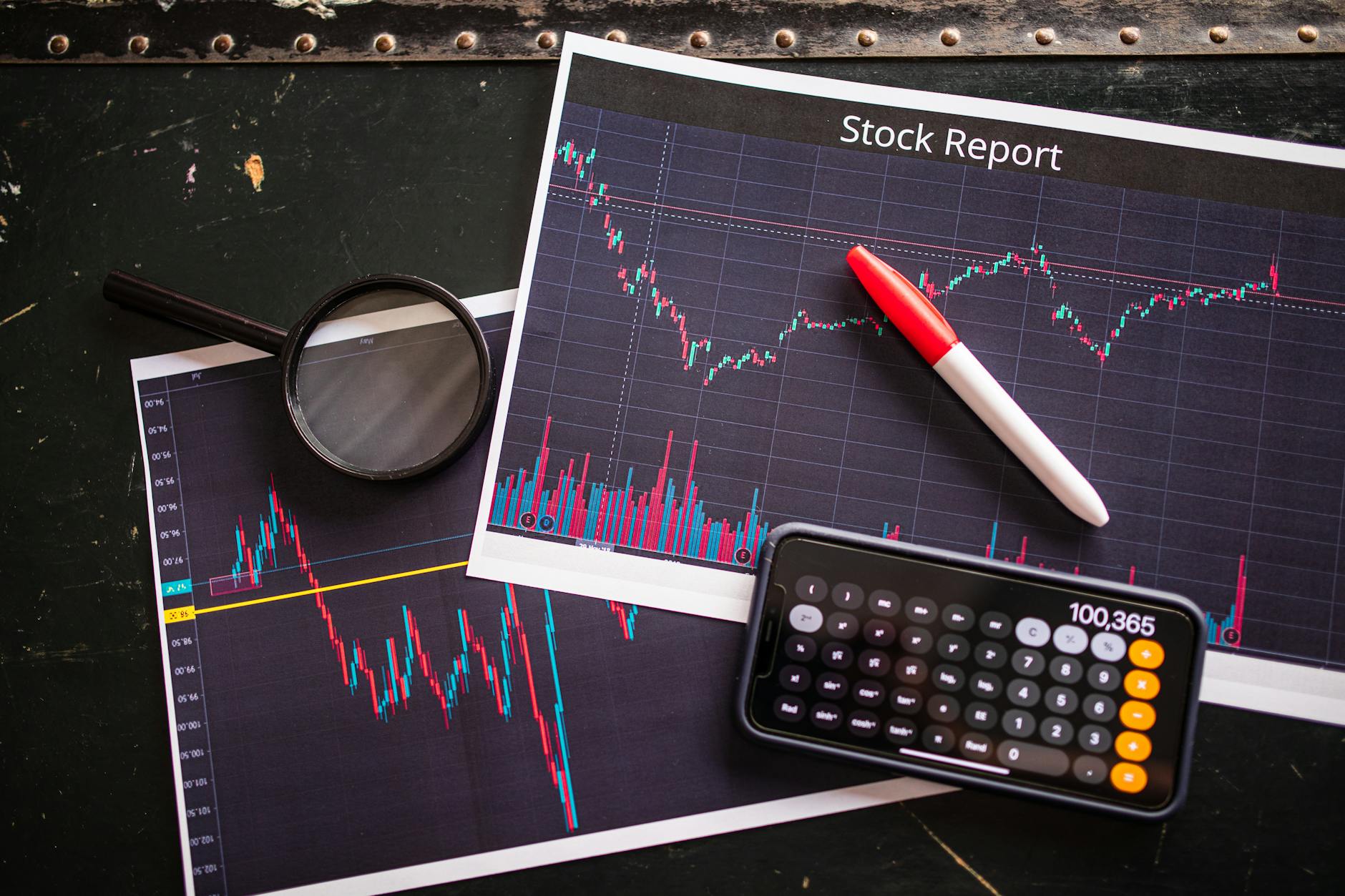
The era of "algorithmic supremacy" was supposed to be here. As we navigate through August 2026, the buzz surrounding Artificial Intelligence (AI) has transitioned from mere hype to a fundamental component of the global financial infrastructure. Whether it is a retail trader in Mumbai using a sophisticated mobile app or a high-frequency trading (HFT) firm in a data center near the NSE, the question remains the same: Can AI actually beat the market through precise timing?
For years, the promise was simple: feed an AI model every piece of historical data, real-time news feeds, and social media sentiment, and it will tell you exactly when to enter and exit a position. However, a groundbreaking new study released this month has sent shockwaves through the quantitative finance community, casting significant doubt on the ability of even the most advanced Large Language Models (LLMs) and neural networks to consistently time market swings.
As an Indian investor, understanding whether these technological marvels are a "magic wand" or a sophisticated distraction is crucial for your long-term wealth creation strategy.
The Promise of AI: Why We Thought It Would Work
To understand why the recent study is so controversial, we first need to understand why the market was so optimistic about AI-driven timing. In the current 2026 landscape, the sheer volume of data available to a trader is unprecedented.
Data Processing at Scale
Unlike human traders, who can only process a handful of news articles or technical indicators per minute, an AI can ingest:
- Real-time NSE/BSE order book data.
- Global macro indicators (US Federal Reserve decisions, Brent Crude prices).
- Unstructured data (earnings call transcripts, CEO tweets, and even satellite imagery for commodity forecasting).
- Alternative data (shipping manifests, retail footfall data, etc.).
Pattern Recognition and Speed
AI excels at finding non-linear relationships. A human might see a drop in Nifty 50 volatility and a rise in specific IT stocks and connect them. An AI can see a correlation between a specific weather pattern in Southeast Asia and the supply chain movement of a mid-cap chemical company in Gujarat, potentially predicting a price move before it hits the mainstream news.
The "Doubt" Study: Why AI Struggles with Market Timing
The recent study, which analyzed the performance of several high-end AI trading models over the last 18 months, suggests that while AI is excellent at classification (predicting if a stock is "volatile" or "stable"), it is remarkably poor at timing (predicting the exact hour or day of a reversal).
The Efficiency Problem
The primary reason cited by researchers is the Efficient Market Hypothesis (EMH). In a modern market, once an AI identifies a pattern, thousands of other bots identify it milliseconds later. This leads to "alpha decay," where the profit opportunity vanishes before a human—or even a slower bot—can act on it.
The "Black Swan" and Regime Shifts
AI models are trained on historical data. They are essentially looking in the rearview mirror to predict the road ahead. However, markets are prone to "regime shifts"—sudden changes in market behavior caused by geopolitical tensions or unprecedented regulatory shifts from SEBI. When the market enters a regime it hasn't seen in the training data, the AI's predictions often fall apart.
Overfitting: The Silent Killer
One of the biggest risks highlighted in the study is overfitting. This occurs when an AI model becomes so hyper-tuned to the specific noise and quirks of the past two years that it mistakes "randomness" for "patterns." When applied to the live market in 2026, these models fail because the "pattern" they found was actually just a statistical fluke from 2025.
Evaluating AI Tools: How to Use Them Without Losing Your Capital
If AI isn't a "crystal ball," does that mean it's useless for the Indian investor? Absolutely not. The key is to move from using AI for prediction to using AI for analysis and screening.
Here is how you can evaluate the utility of AI tools in your current investment workflow:
1. From "Timing" to "Filtering"
Instead of asking an AI, "When should I buy Reliance Industries?", use AI-powered tools to ask, "Which stocks in the Nifty Next 50 show a divergence between price and volume compared to their 5-year average?"
- Actionable Tip: Use a screener to filter stocks based on fundamental health (Debt-to-Equity, ROCE) rather than trying to time the exact entry point. This shifts your focus from "guessing the bottom" to "buying quality."
2. Sentiment Analysis vs. Reality
AI can scan news headlines to tell you if the sentiment around a sector (like Renewable Energy) is bullish or bearish. However, sentiment is often a "lagging indicator."
- Example: By the time an AI tells you sentiment is "extremely bullish" on a specific banking stock, the price may have already rallied 15%.
- Strategy: Use sentiment as a secondary confirmation, not a primary signal.
3. Risk Management via Simulation
One of the most effective uses of AI is Monte Carlo simulations. You can use AI-driven tools to simulate 10,000 different market scenarios for your portfolio.
- Actionable Tip: Use a Portfolio X-Ray feature to see how your stocks are correlated. If your AI-selected stocks all move in the same direction during a market dip, your portfolio is not actually diversified, regardless of how many different sectors you hold.
Practical Strategies for the Modern Indian Investor
Given the findings that AI-driven timing is unreliable, how should an investor in 2026 structure their approach? We suggest a "Hybrid Approach"—combining the computational power of AI with the disciplined logic of traditional investing.
The Core-Satellite Model
This is a highly effective way to manage the risks identified in the recent study.
- The Core (70-80% of Portfolio): Focus on long-term, high-quality assets. Use a mutual fund screener to identify index funds or large-cap funds that have shown consistent performance across different market cycles. This part of your portfolio doesn't need "timing"; it needs "time in the market."
- The Satellite (20-30% of Portfolio): This is where you can experiment with AI-assisted technical analysis. Use high-end trading terminals to look for momentum, but keep the position sizes small. If the AI's "timing" fails, your core wealth remains intact.
Avoiding the "Complexity Trap"
As an investor, there is a temptation to use increasingly complex tools to find an "edge." However, complexity often leads to higher transaction costs and slippage.
- Example: If an AI suggests a high-frequency rotation strategy that results in 50 trades a month, the brokerage fees and STT (Securities Transaction Tax) in India might eat up all your potential profits.
- Advice: Always calculate the "net impact" of a strategy. A "perfectly timed" trade that loses 2% to costs is a losing trade.
Diversification Across Markets
In 2026, the Indian market is deeply integrated with global trends. An Indian investor should not just look at the Nifty or Sensex.
- Global Exposure: Understanding how US-listed companies on the NYSE or Nasdaq react to inflation data can provide context for how Indian ADRs (American Depository Receipts) or domestic heavyweights will move.
- How to Access: You can gain exposure to US markets through various Indian mutual funds or by using a US brokerage account under the RBI LRS (Liberalised Remittance Scheme) or via specialized vehicles in GIFT City.
Summary: The Human-AI Partnership
The takeaway from the recent study isn't that AI is a failure, but that it is a tool of probability, not certainty. The "magic" of timing is a myth, but the "power" of data-driven decision-making is real.
| Feature | AI's Strength | AI's Weakness |
|---|---|---|
| Data Analysis | Processing millions of data points instantly. | Identifying "Black Swan" events. |
| Speed | Executing trades in milliseconds. | Following the "crowd" into a bubble. |
| Pattern Recognition | Finding subtle correlations in data. | Mistaking noise for a trend (Overfitting). |
| Emotion | Removing fear and greed from execution. | Lacking "common sense" or context. |
As we move further into 2026, the most successful investors will not be those who try to outrun the machines, but those who use the machines to build more robust, disciplined, and diversified portfolios. Use the tools available to you—the screeners, the X-ray views, and the simulators—to enhance your understanding, not to replace your judgment.
The market is a chaotic system. AI can help you map the chaos, but it cannot predict the storm.
This article is for information and education only. Downstox is not a SEBI-registered Research Analyst or Investment Adviser and this is not investment advice. Markets carry risk; consult a SEBI-registered adviser before investing.
For information and education only. This article is for information and education only. Downstox is not a SEBI-registered Research Analyst or Investment Adviser, and nothing here is investment advice or a recommendation to buy or sell any security. Any views or calls attributed to third parties are theirs, not Downstox's. Markets carry risk; consult a SEBI-registered adviser before investing.
Downstox Markets Desk
Markets Desk · NSE · BSE · Nifty 50
Daily Indian-equities desk - Nifty, Sensex, sector wraps, technical analysis.
View Downstox Markets Desk's profile →Get weekly market insights delivered free
Curated Indian market analysis, every Sunday morning. Written by traders, for traders.
Join 10,000+ Indian traders. No spam. Unsubscribe anytime.
Related reads
More in market analysis →
Technocraft Ventures IPO Day 2: Subscription Status and GMP

Why Indian Markets Rise Amid Global Uncertainty in 2026

Natural Gas Price Trends 2026: Analyzing Geopolitical Impact
SBI Q1 FY2027 Results Preview: Key Factors to Watch