Rupee opens 6 paise higher at 95.64 against US dollar
Everything you need to know about rupee opens 6 paise higher at 95.64 against us dollar — practical strategies, key concepts, and tools for Indian investors and traders.
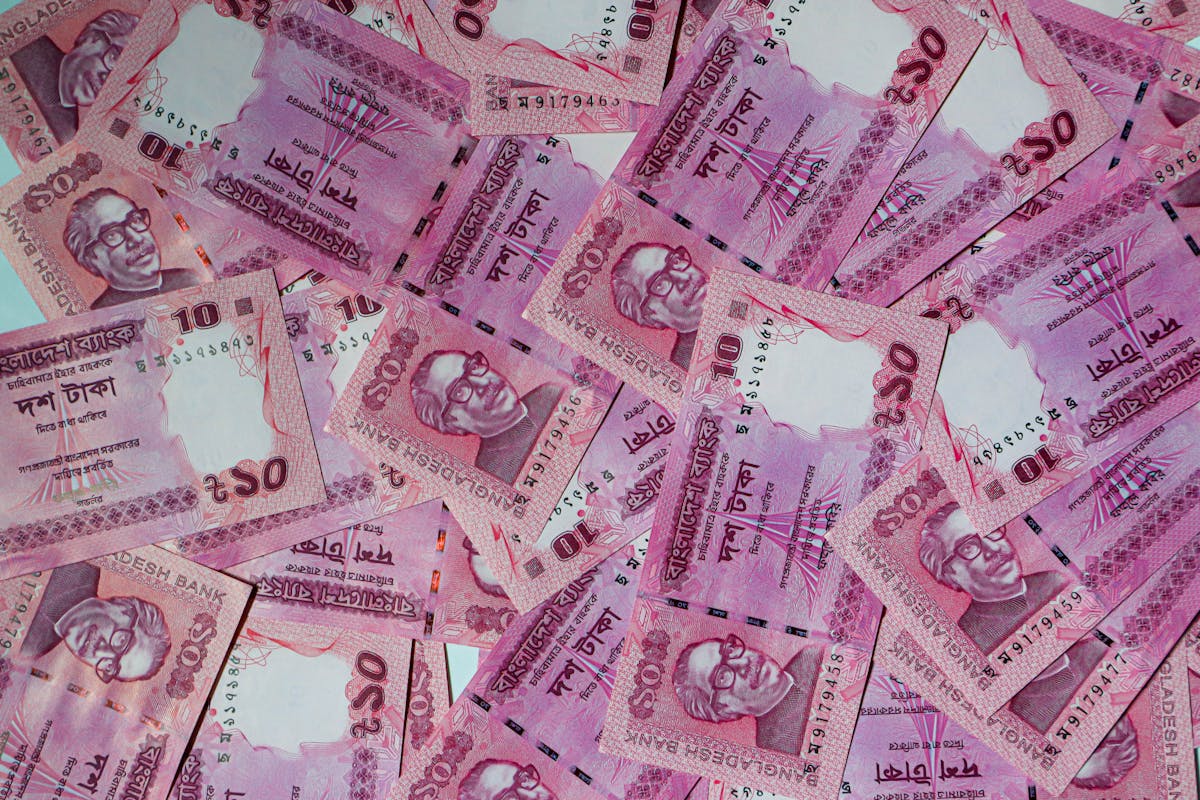
The Indian rupee opened the trading session on 24 August 2026 at 95.64 against the US dollar, gaining six paise from the previous close. While a six-paise shift may look modest at first glance, currency movements of this size often ripple through equity markets, affect corporate earnings, and influence the tactics of both short-term traders and long-term investors. In this article we unpack what the current level means, why the rupee has moved, which sectors feel the impact most, and how you can use the information—along with Downstox's suite of tools—to make more informed decisions. Remember, the goal is education, not a recommendation to buy or sell any security.
1. Understanding the Rupee's Move: What 95.64 Means
Spot rate basics
The spot exchange rate tells you how many rupees you need to buy one US dollar. At 95.64 ₹/USD, one dollar costs roughly ninety-five rupees and sixty-four paise. Compared with the level a year ago (around 102 ₹/USD in mid-2025), the rupee has appreciated by about 6 %.
Why a six-paise change matters
- Leverage effect: Many Indian companies have foreign-currency revenues or costs. A 1 % rupee appreciation can shift earnings by several basis points, especially for exporters whose sales are invoiced in dollars.
- Portfolio flows: Foreign portfolio investors (FPIs) often hedge currency exposure. A stronger rupee reduces the hedging cost, making Indian equities relatively more attractive.
- Inflation linkage: Import-heavy items like crude oil, electronics, and gold become cheaper in rupee terms, which can ease wholesale price index (WPI) pressure and influence RBI policy.
Reading the quote
When you see "Rupee opens 6 paise higher at 95.64", the market is quoting the bid price (the rate at which you can sell dollars). The ask (the rate to buy dollars) is usually a few paise higher, reflecting the dealer spread. For most retail investors, the mid-point (≈95.62) is a useful reference for quick mental math.
2. Drivers Behind the Rupee's Appreciation
Currency movements rarely stem from a single cause. In the current environment, a blend of domestic and global factors is pushing the rupee upward.
2.1 Domestic fundamentals
- Robust foreign direct investment (FDI): In FY 2025-26, India attracted over US $85 billion of FDI, driven by manufacturing incentives (PLI schemes) and semiconductor fab announcements. Higher FDI means more dollar inflows, supporting the rupee.
- Strong merchandise exports: Engineering goods, pharmaceuticals, and IT services posted double-digit growth in Q2 FY 2026, boosting dollar receipts.
- RBI's calibrated stance: The Reserve Bank of India has kept the policy repo rate steady at 6.50 % while intervening minimally in the forex market to avoid excessive volatility. The central bank's foreign-exchange reserves stood at US $640 billion in July 2026, providing a buffer.
2.2 Global cues
- US Federal Reserve policy: The Fed signaled a pause in rate hikes after its July 2026 meeting, citing easing inflation. A less aggressive Fed reduces the dollar's appeal, allowing other currencies—including the rupee—to gain.
- Commodity prices: Brent crude hovered around US $78 /barrel in August 2026, down from the US $95 /barrel peak in early 2025. Lower oil import bills reduce demand for dollars, supporting the rupee.
- Risk-on sentiment: Global equity markets rallied on hopes of a soft landing for the US economy, prompting investors to shift into emerging-market assets, including Indian equities and the rupee.
2.3 Technical factors
- Support-resistance levels: The 95.50-95.70 band has acted as a modest resistance zone since June 2026. A clean break above 95.70 could open the path toward 96.00, while a dip below 95.40 might test the 95.00 psychological level.
- Order flow: On 24 August, interbank desks noted a net buying interest of roughly US $150 million in the rupee, driven by corporate treasurers locking in export proceeds.
3. Sector-wise Impact on Indian Equities
Currency movements affect companies differently based on their exposure to imports, exports, and foreign debt. Below is a practical look at how the rupee's current strength may influence key sectors.
3.1 Information Technology (IT) & Business Process Management (BPM)
- Revenue effect: Indian IT firms invoice a large share of contracts in USD. A stronger rupee reduces the rupee-value of each dollar earned, pressuring topline growth if hedges are not in place.
- Margin nuance: Many large IT players hedge 70-80 % of their forecasted dollar receivables via forward contracts. The unhedged portion (≈20-30 %) feels the direct impact.
- Action point for investors: Look at companies' hedging disclosures in quarterly results (e.g., "USD receivables hedged at 94.50-95.00"). Those with higher hedge ratios may be less vulnerable to short-term rupee moves.
3.2 Pharmaceuticals & Healthcare
- Export orientation: Generic drug exporters earn a significant share of revenue in USD and EUR. Rupee appreciation can compress margins unless offset by cost savings or price adjustments.
- Import cost benefit: Active pharmaceutical ingredients (APIs) often imported from China become cheaper in rupee terms, partially offsetting export pressure.
- Example: A firm with 60 % of sales in USD and 30 % of cost base in imported APIs may see a net impact of roughly –0.4 % on EBITDA for every 1 % rupee gain, assuming no hedging.
3.3 Oil & Gas, Refining, and Petrochemicals
- Import bill relief: Crude oil is priced in USD. A stronger rupee lowers the rupee cost per barrel, boosting refining margins.
- Downstream effect: Petchem companies that rely on imported naphtha or ethane also benefit from lower input costs.
- Caveat: If the rupee's gain is driven by risk-on sentiment that also lifts global crude prices, the net effect could be neutral. Monitoring both FX and commodity trends together is essential.
3.4 Exporters (Textiles, Gems & Jewellery, Engineering)
- Direct hit: Firms that sell finished goods abroad and have limited natural hedges see rupee appreciation as a headwind.
- Mitigation strategies: Some exporters use invoice currency switching (e.g., invoicing in euros) or maintain foreign-currency working capital loans to match revenues and expenses.
3.5 Importers (Consumer Electronics, Automobiles, Capital Goods)
- Tailwind: Companies that rely heavily on imported components or finished goods enjoy lower rupee costs, which can improve gross margins or allow competitive pricing.
- Inventory timing: Importers may accelerate purchases when the rupee is strong to lock in lower costs, affecting working-capital cycles.
3.6 Financials (Banks, NBFCs)
- Foreign currency loans: Banks with exposure to external commercial borrowings (ECBs) see their rupee-denominated liability fall when the rupee strengthens, improving capital adequacy ratios.
- Derivative trading: Currency volatility drives volumes in the interbank forwards and options market, boosting fee-based income for banks with strong FX desks.
Quick reference table
| Sector | Primary FX Impact | Typical Mitigation | Indirect Benefits |
|---|---|---|---|
| IT/BPM | Revenue ↓ (USD invoices) | Forward hedges, natural hedge via overseas costs | Lower software import costs |
| Pharma | Revenue ↓, Cost ↓ (APIs) | Selective hedging, API localisation | Cheaper raw material imports |
| Oil & Gas | Input cost ↓ (crude) | Limited (mostly pass-through) | Refining margin expansion |
| Exporters | Revenue ↓ | Invoice currency switch, FX loans | Potential market-share gains if competitors suffer more |
| Importers | Cost ↓ | Spot purchases, forward locks | Ability to cut retail prices or boost margins |
| Financials | Liability ↓ (ECBs) | Active FX desk, arbitrage | Higher trading volumes, fee income |
4. How Traders Can Use Currency Moves in Their Strategies
For active traders—whether intraday, swing, or position-based—the rupee's movement offers several tactical angles. The key is to treat the FX rate as a macro variable that can confirm or contradict equity-specific signals.
4.1 Correlation-based equity trades
- Positive correlation: Historically, Nifty IT stocks have shown a negative correlation with USD/INR (when rupee strengthens, IT stocks tend to dip). A trader might short an IT index future or buy a put spread when the rupee breaks above a resistance level (e.g., 95.80) and the IT sector shows weakening momentum.
- Negative correlation: Nifty Oil & Gas often moves opposite to the rupee. A long position in an oil-future or a refinery stock could be considered when the rupee appreciates alongside falling crude prices.
Example: On 24 August, the rupee rose to 95.64 while Brent slipped to US $78. A trader noticing a bullish crossover in the 50-day moving average of Reliance Industries might initiate a small long position, setting a stop-loss based on the ATR (average true range) to manage risk.
4.2 Currency-linked derivatives
- Futures & options on USD/INR: The NSE offers weekly and monthly contracts. A trader expecting further rupee appreciation could buy a call option on the rupee (i.e., a put on USD/INR) with a strike near 95.50, paying a premium that reflects implied volatility.
- Cross-currency spreads: Pairing a long USD/INR futures contract with a short EUR/INR contract can isolate the dollar's movement against a basket, useful when the euro is also volatile.
4.3 Pair trading with export-import stocks
- Construct a basket: Go long on a basket of importers (e.g., Tata Consumer, Maruti) and short an equal-value basket of exporters (e.g., Infosys, Sun Pharma). The net exposure isolates the FX effect while neutralizing broader market moves.
- Re-balancing: Review the hedge ratio monthly, adjusting for changes in each company's foreign-currency exposure as disclosed in their annual reports.
4.4 Using volatility as a signal
- Implied volatility (IV) spikes in USD/INR options often precede sharp moves. A rise in IV combined with a breakout in the spot rate can hint at increased market uncertainty—traders may tighten position sizes or widen stop-losses.
4.5 Risk-management checklist for FX-linked trades
- Define the horizon – Is the trade based on a short-term news event (e.g., RBI statement) or a medium-term trend (e.g., FDI inflow)?
- Set a clear entry/exit – Use technical levels (support/resistance) or fundamental triggers (change in export-import data).
- Position size – Limit FX-linked exposure to no more than 5-10 % of total trading capital to avoid over-leveraging.
- Use stop-losses – Base them on ATR or a fixed percentage (e.g., 1 % of capital) rather than arbitrary points.
- Monitor macro calendars – RBI monetary policy, US non-farm payrolls, and crude oil inventory reports can cause sudden swings.
5. Tools on Downstox to Monitor and Analyse Forex-Linked Exposures
Downstox provides several features that let you keep an eye on currency movements and their equity implications without needing multiple platforms.
5.1 Real-time FX ticker in the Terminal
- The Downstox Terminal displays live USD/INR, EUR/INR, GBP/INR, and other major pairs alongside Nifty and Sensex charts. You can add a custom watchlist that pairs a currency pair with a sector index (e.g., USD/INR + Nifty IT).
- Tip: Enable price alerts for the USD/INR pair at 95.50 and 95.80. When the rate hits these levels, you'll get a push notification, prompting you to review your equity positions.
5.2 Screener for currency-sensitive stocks
- Use the Stock Screener to filter companies by foreign-currency revenue % (available under the "Financials" tab). For instance, set a filter: "Export sales > 30 % of total sales" to isolate exporters.
- Combine this with a price-change > 1 % over the last session to spot stocks reacting sharply to the rupee move.
5.3 Portfolio X-Ray for exposure analysis
- Upload your holdings to Portfolio X-Ray and enable the "FX Exposure" overlay. The tool estimates the percentage of your portfolio's earnings that are denominated in USD or other currencies based on the latest annual reports.
- If the X-Ray shows that 18 % of your portfolio's EBITDA is USD-linked, you can gauge how much a 1 % rupee shift might affect overall returns and decide whether to add a hedge (e.g., via currency futures).
5.4 Mutual Fund Screener for FX-themed funds
- Some mutual funds explicitly target export-oriented or import-benefiting themes. The Mutual Fund Screener lets you search by fund objective keywords like "export", "global", or "FX hedge". Review the fund's portfolio composition to see if it aligns with your view on the rupee's direction.
5.5 Educational resources & webinars
For information and education only. This article is for information and education only. Downstox is not a SEBI-registered Research Analyst or Investment Adviser, and nothing here is investment advice or a recommendation to buy or sell any security. Any views or calls attributed to third parties are theirs, not Downstox's. Markets carry risk; consult a SEBI-registered adviser before investing.
Downstox Sectors Desk
Sectors & Stocks Desk · Sector analysis · Stock fundamentals · Tata group
Sector-level reporting (IT, pharma, auto, defence) and individual stock coverage.
View Downstox Sectors Desk's profile →Get weekly market insights delivered free
Curated Indian market analysis, every Sunday morning. Written by traders, for traders.
Join 10,000+ Indian traders. No spam. Unsubscribe anytime.
Related reads
More in market analysis →
Charting the Global Economy: UK Payrolls Slide, Inflation Rises

Sebi turns down Adani-linked FPIs' settlement applications

Korean Traders Chase 40% Coupons as Risk Appetite Survives Rout