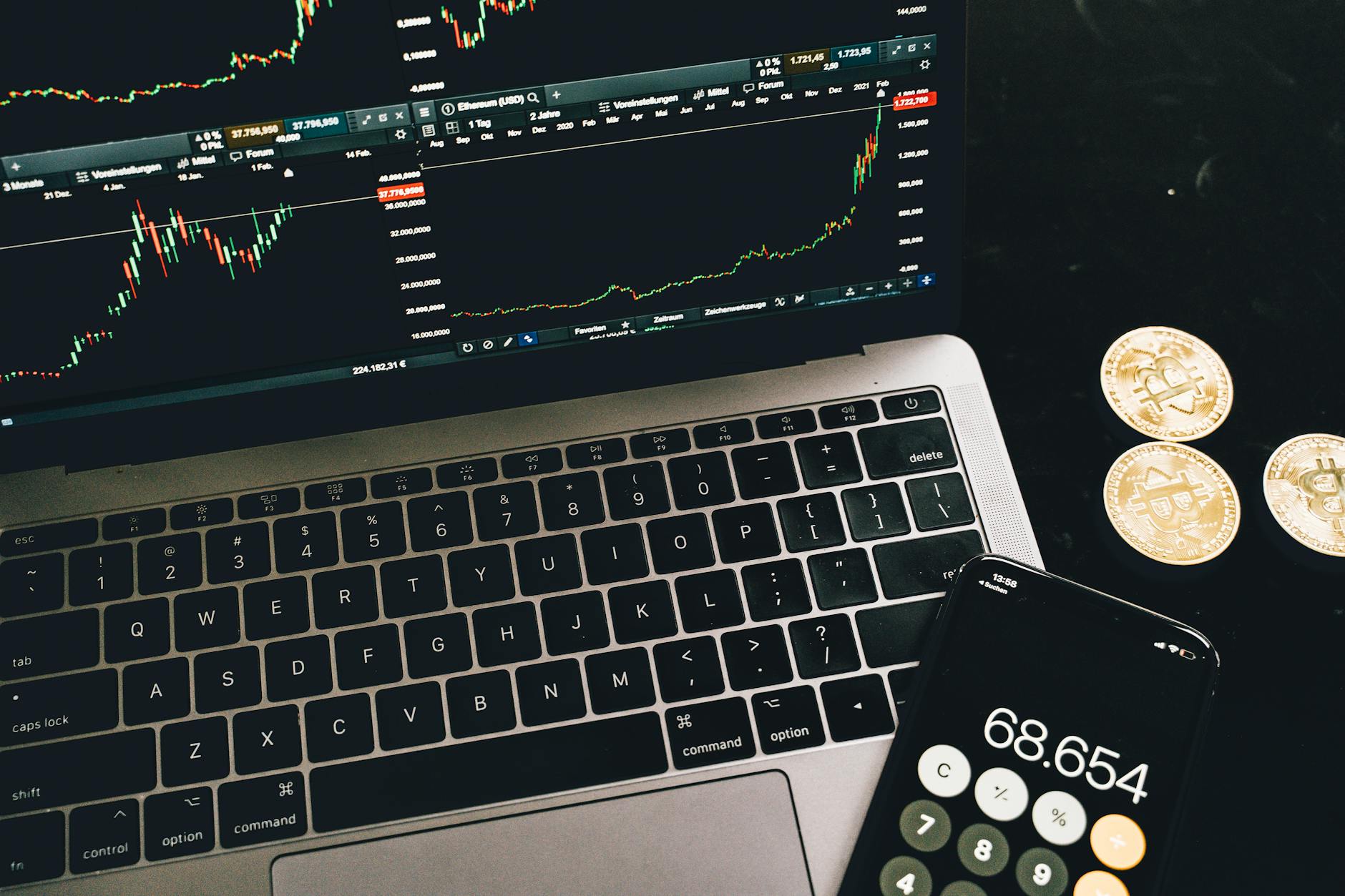
Coinbase Earnings Analysis: Impact of Declining Crypto Volumes
Analyze why Coinbase reported a surprise loss in 2026 and how reduced crypto trading volumes are affecting its revenue model and stock performance.

The digital asset landscape has always been defined by volatility, but the latest quarterly earnings report from Coinbase Global, Inc. (NASDAQ: COIN) has sent shockwaves through both the crypto and traditional equity markets. For the Indian investor, who often looks to US-listed tech and fintech stocks as a proxy for global digital adoption, this "surprise loss" is a significant signal. While Coinbase has enjoyed periods of massive profitability during crypto bull runs, the current data suggests a cooling period that warrants a closer look at how macroeconomic shifts impact even the largest players in the ecosystem.
Decoding the Coinbase Earnings: Why the Surprise?
When a company as dominant as Coinbase reports a loss, the first question for any analyst is: Is this a structural failure or a cyclical downturn?
The recent financial results indicate that trading volumes—the lifeblood of Coinbase's revenue model—have dried up significantly. In the crypto world, revenue is highly correlated with volatility and trading volume. When prices move sideways, traders move less, and the fees collected by exchanges plummet.
The Revenue Mix Problem
Coinbase's business model relies heavily on two pillars:
- Transaction Fees: The spread and fees charged on every buy/sell order.
- Subscription and Services: Revenue from staking, lending, and interest income on stablecoins.
The current data suggests that while the subscription side has shown some resilience, the transaction fee revenue has contracted sharply. For an investor, this highlights a key risk: platform dependency on market volatility. When the market goes "quiet," these companies face a liquidity crunch.
Macroeconomic Headwinds
The broader economic environment in 2026 has played a massive role. With interest rate trajectories remaining uncertain and global liquidity tightening, speculative capital—the kind that flows into high-risk assets like Bitcoin and Ethereum—tends to retreat. For an Indian investor tracking US markets via a US brokerage account under the RBI LRS (Liberalised Remittance Scheme), understanding this link between global liquidity and crypto-adjacent stocks is crucial.
The Ripple Effect: How Crypto Volatility Impacts Indian Markets
You might wonder, "I invest in the Nifty 50 and Sensex, why does a US-listed crypto exchange matter to me?" In a globalized financial system, nothing happens in a vacuum.
Correlation and Sentiment
The "risk-on" or "risk-off" sentiment is a global phenomenon. When major US fintech companies like Coinbase report unexpected losses, it often triggers a sell-off in other high-growth sectors. We often see this reflected in the NSE (National Stock Exchange) through:
- IT Services: High-growth tech stocks in India often move in tandem with US Nasdaq sentiment.
- Fintech Disruption: Indian fintech players, though operating under SEBI and RBI regulations, often see their valuations re-rated based on the global "fintech multiple" set by US giants.
The Indirect Connection
If a major global player like Coinbase faces a downturn, it can lead to reduced capital inflows into crypto-related ETFs and products globally. For an Indian investor, this might mean seeing increased volatility in domestic assets that are sensitive to global liquidity, such as mid-cap tech stocks or high-beta growth stocks.
To manage this, many investors use tools like the Downstox Portfolio X-Ray to see how much of their domestic exposure is actually sensitive to global tech sentiment. If your portfolio is heavily weighted toward high-growth tech, a "surprise loss" in the US can be a leading indicator of volatility at home.
Evaluating Crypto-Linked Equities: A Framework for Investors
For those looking to diversify into US markets, Coinbase serves as a high-beta play on the crypto market. However, evaluating such stocks requires a different lens than evaluating a stable blue-chip company.
Key Metrics to Track
If you are analyzing a company like Coinbase or other Nasdaq-listed crypto entities, consider these three metrics:
- Trading Volume Trends: Is the platform seeing more or fewer users? High volume is the primary driver of fee-based revenue.
- Product Diversification: Is the company relying solely on trading fees, or are they successfully moving into stable, recurring revenue streams like custody services or staking?
- Regulatory Environment: This is the biggest "X-factor." For US-listed companies, changes in SEC (Securities and Exchange Commission) stances can create massive price swings overnight.
Diversification vs. Concentration
It is vital to distinguish between investing in crypto and investing in crypto-related equities.
- Investing in crypto involves direct exposure to the assets.
- Investing in Coinbase involves exposure to the company's management, its operational costs, and its ability to navigate US regulations.
An investor should ask: "Am I prepared for the volatility that comes with a company whose revenue is tied to the unpredictable movements of digital assets?"
Practical Strategies for Navigating High-Volatility Periods
When markets get choppy—whether it's the Nifty 50 reacting to US inflation data or Coinbase reacting to a dip in Bitcoin volume—having a strategy is better than reacting emotionally.
1. Use the "Screener" Approach
Instead of chasing a stock because it dropped 10%, use a screener to identify why it dropped. Is the drop due to a fundamental change in the business model, or is it just a cyclical dip in trading volumes? If the company's fundamentals (like user base growth) remain intact, the drop might be a temporary market reaction.
2. Monitor Macro Indicators
For US-market investors, keep an eye on:
- US Federal Reserve Meetings: Interest rate decisions dictate the flow of money into speculative assets.
- US Inflation Data (CPI/PCE): This dictates the Fed's next move.
3. Systematic Investing (SIP/STP)
For those looking to enter high-volatility sectors, a Systematic Transfer Plan (STP) or a regular SIP approach can help average out the cost of acquisition. This mitigates the risk of "buying the top" right before a surprise loss is announced.
4. Portfolio Rebalancing
If a sudden drop in a US-listed stock significantly changes your portfolio's risk profile, use a Portfolio X-Ray tool to evaluate if you are now over-exposed to a single sector. Rebalancing ensures that a single "surprise loss" in one sector doesn't derail your long-term financial goals.
Summary: The Importance of Context in 2026
The Coinbase earnings report is a classic example of why "headline reading" is dangerous without "contextual analysis." A loss is not always a sign of a dying company; sometimes, it is simply a sign of a market in transition.
For the Indian investor, the takeaway is twofold:
- Global Connectivity: Your investments in the NSE/BSE are part of a global web. US market movements in the fintech and crypto sectors can serve as a barometer for global risk appetite.
- Risk Management: High-reward opportunities in the US markets (accessible via GIFT City or RBI LRS) come with high-risk profiles. Diversification remains the most effective tool to protect your capital from "surprise" events.
As we move through 2026, the ability to distinguish between a cyclical downturn (temporary) and a structural shift (permanent) will separate successful investors from those caught in the volatility.
This article is for information and education only. Downstox is not a SEBI-registered Research Analyst or Investment Adviser and this is not investment advice. Markets carry risk; consult a SEBI-registered adviser before investing.
For information and education only. This article is for information and education only. Downstox is not a SEBI-registered Research Analyst or Investment Adviser, and nothing here is investment advice or a recommendation to buy or sell any security. Any views or calls attributed to third parties are theirs, not Downstox's. Markets carry risk; consult a SEBI-registered adviser before investing.
Downstox US Markets Desk
US & Global Equities Desk · US equities · S&P 500 · Nasdaq
US stocks for Indian investors - S&P 500, Nasdaq, AI and semis, big tech, and how to access them from India.
View Downstox US Markets Desk's profile →Get weekly market insights delivered free
Curated Indian market analysis, every Sunday morning. Written by traders, for traders.
Join 10,000+ Indian traders. No spam. Unsubscribe anytime.
Related reads
More in us markets →
US Semiconductor Sector Analysis: TSMC, AMD & Broadcom 2026

Dentsply Sirona vs Peers: Q1 2026 Dental Tech Review

Understanding the Magnificent Seven: US Big Tech for Indian Investors

Nasdaq 100 Forecast: QQQ falls amid a rotation out of tech