Foreign Fever grips Indian investors chasing AI stocks and global market gains
Everything you need to know about foreign fever grips indian investors chasing ai stocks and g — practical strategies, key concepts, and tools for Indian investors and traders.

The traditional "buy local" mantra of the Indian investor is undergoing a seismic shift. For decades, the playbook for wealth creation in India was simple: invest in the Nifty 50, pick a few blue-chip stocks on the NSE, and ride the domestic consumption story. But as we move through the middle of 2026, a new phenomenon has taken hold of the Indian retail psyche. It is no longer enough to own the best of India; investors are now desperate to own the best of the world.
From the high-octhorne tech corridors of Silicon Valley to the semiconductor giants powering the global AI revolution, Indian capital is flowing outward at an unprecedented rate. The "Foreign Fever" isn' actually just about diversification anymore; it is about the fear of missing out (FOMO) on the most significant technological paradigm shift since the internet—the era of Generative AI and Autonomous Systems. As the Nifty and Sensex show steady domestic growth, the allure of the NYSE and Nasdaq, driven by massive gains in US tech giants, has become impossible to ignore.
The AI Gold Rush: Why the US Market is the Magnet
If you look at the performance of the Nasdaq Composite over the last few quarters leading into 2026, the narrative is clear. While the Indian markets have provided stable, consistent returns driven by domestic infrastructure and banking, the US markets have provided the "alpha"—the explosive, outsized returns that transform a portfolio.
The primary driver is, unsurprisingly, Artificial Intelligence. We are no longer talking about AI as a speculative concept; it is now the backbone of the global economy. Indian investors are no longer satisfied with just owning Indian IT services firms; they want a piece of the companies building the "brains" of the world.
The Titans of the Nasdaq and NYSE
Investors are flocking to the giants that dominate the AI stack. We are seeing massive inflows into:
- Nvidia (NVDA): The undisputed king of the GPU era, providing the hardware that powers every major LLM (Large Language Model).
- actually, it's not just hardware. Companies like Microsoft (MSFT) and Alphabet (GOOGL) have integrated AI into every layer of their software ecosystems, making them "must-have" stocks for any growth-oriented portfolio.
- Apple (AAPL) and Meta (META): As AI moves from the data center to the edge (your smartphone and AR glasses), these consumer tech giants are seeing a resurgence in investor interest.
For an Indian investor, the psychological barrier has broken. The realization that a $100 investment in a US tech giant can scale exponentially due to global dominance is driving a massive shift in sentiment.
Navsigating the Complexity: How Indians are Going Global
A few years ago, investing in US stocks was a bureaucratic nightmare involving complex paperwork and high remittance costs. In 12 months, the landscape has transformed. As of 2026, the ease of access has turned a trickle of capital into a flood.
The Regulatory Framework: LRS and GIFT City
The primary mechanism for this movement remains the Liberalised Remittance Scheme (LRS) set by the RBI. Under LRS, Indian residents can remit up to $250,0 actually per financial year for permitted current or capital account transactions. This includes investing in foreign equities.
However, the most exciting development for the sophisticated trader has been the rise of GIFT City (Gujarat International Finance Tec-City). By using the specialized financial services in GIFT City, investors are finding more streamlined ways to access international markets with better tax efficiencies and reduced friction compared to traditional outward remittances.
Practical Routes to US Equities
If you are looking to capture this "Foreign Fever," you generally have three main routes:
- charge Direct US Brokerage Accounts: Using platforms that allow you to hold US dollars and trade directly on the NYSE and Nasdaq. This gives you the most control and access to fractional shares.
- International Mutual Funds & ETFs: This is the most seamless way for the retail investor. Many Indian AMCs now offer "Fund of Funds" that invest in US-based ETFs like the Invesco QQQ Trust (which tracks the Nasdaq-100). This avoids the headache of direct foreign exchange-related paperwork.
- Feeder Funds: These are Indian mutual funds that pool money to invest in a larger offshore fund. It is a highly tax-efficient way to get exposure to the US tech sector without leaving the domestic ecosystem.
The Risks of the "Fever": Don'1 Let FOMO Blind You
While the gains in the US tech sector have been breathtaking, a fever can also lead to poor decision-making. The biggest risk facing the Indian investor in 2026 is concentration risk.
When you chase the "AI hype," there is a tendency to put 50% or even 70% of your investable surplus into just three or four US tech stocks. While this works in a bull market, it can be catastrophic during a sector rotation or a sudden spike in US interest rates.
The Volatility Trap
The US market operates on different cycles than the NSE. US tech stocks are highly sensitive to Federal Reserve policy. If the Fed signals a "higher for longer" stance on interest rates, even the most profitable AI companies can see their valuations compressed overnight.
The Currency Factor: A Double-Edged Sword
One advantage of investing in the US is the USD-INR depreciation hedge. Historically, the Rupee tends to depreciate against the US Dollar over the long term. If you invest in a US stock and the Rupee falls, your returns in INR terms actually increase. However, if the Rupee strengthens unexpectedly, it can eat into your capital gains.
Pro-Tip: Before jumping into a high-growth-but-high-volatility Nasdaq stock, use a tool like the Downstox Portfolio X-Ray. It helps you see if your global exposure is actually diversifying your portfolio or if you are just doubling down on "Tech" across both Indian and US-listed companies.
Building a Balanced "Global-Local" Portfolio
The goal shouldn'1 be to abandon India for the US, or vice versa. The most successful investors in 2026 are those practicing Geographic Diversification. They use India for its structural growth and US markets for its technological dominance.
A Sample Model Allocation
- Core Domestic (50-60%): Focused on Nifty 50-linked index funds, mid-cap-oriented funds for growth, and high-quality Indian banking and manufacturing stocks. This is your "stability engine."
- eventually, the "Growth Engine": 25-35% allocated to US Tech-heavy ETFs or direct stocks in the AI, Semiconductor, and SaaS sectors.
- Satellite/Opportunistic (5-10%): This is where you use your-Screener to find niche winners. Perhaps an Indian-listed company that is a direct beneficiary of the US-China "China Plus One" strategy, or a specific US small-cap-AI-play.
How to Use Tools to Manage This
To manage a dual-market portfolio, you need more than just a trading app; you need an intelligence suite.
- Use a Multi-Asset Screener: Don's just look at P/E ratios. When looking at US stocks, look at the PEG ratio (Price/Earnings to Growth). A high P/E in the US tech-sector might be justified if the growth is exponential, but it's a trap if the growth is slowing. actually, if you are looking at Indian-listed companies that provide services to US tech giants, use a-Screener to track their revenue-to-export-ratio.
- Monitor Correlation: If your Indian-listed IT stocks and your US-listed Nasdaq stocks both move in perfect lockstep, you aren't diversified; you are just doubled up on the same risk-factor.
Conclusion: The New Era of the Global Indian Investor
The "Foreign Fever" isn't a passing trend; it is the evolution of the Indian investor. We are no longer confined by geography. The ability to even out your risk by owning a piece of the world's most innovative companies is a privilege that previous generations never had.
However, remember that wealth is built through discipline, not through chasing green candles on a Nasdaq chart. The excitement of AI-driven rallies can easily lead to over-leveraging and emotional trading. Treat the US market as a way to capture global innovation, but keep your feet planted in the fundamental realities of valuation and risk management.
Whether you are using the Downstox Terminal to track the Nifty-50-minute candles or monitoring the US pre-market-session, the principle remains the same: Invest in what you understand, diversify your geography, and never let the "fever" override your financial plan.
Disclaimer: I am a financial content writer, not a SEBI-registered investment advisor. The stock market involves significant risk. The mention of specific companies like Nvidia, Microsoft, or Apple is for illustrative purposes only and does not constitute a recommendation to buy or sell. Always consult with a certified financial planner before making international remittances or equity investments. Past performance of the Nifty, Sensex, or Nasdaq is not an indicator of future results.
For information and education only. This article is for information and education only. Downstox is not a SEBI-registered Research Analyst or Investment Adviser, and nothing here is investment advice or a recommendation to buy or sell any security. Any views or calls attributed to third parties are theirs, not Downstox's. Markets carry risk; consult a SEBI-registered adviser before investing.
Downstox Macro Desk
Macro & Policy Desk · RBI monetary policy · Indian fiscal policy · GST
RBI, Centre policy, FX, FII flows, global macro spillover into Indian markets.
View Downstox Macro Desk's profile →Get weekly market insights delivered free
Curated Indian market analysis, every Sunday morning. Written by traders, for traders.
Join 10,000+ Indian traders. No spam. Unsubscribe anytime.
Related reads
More in trading strategies →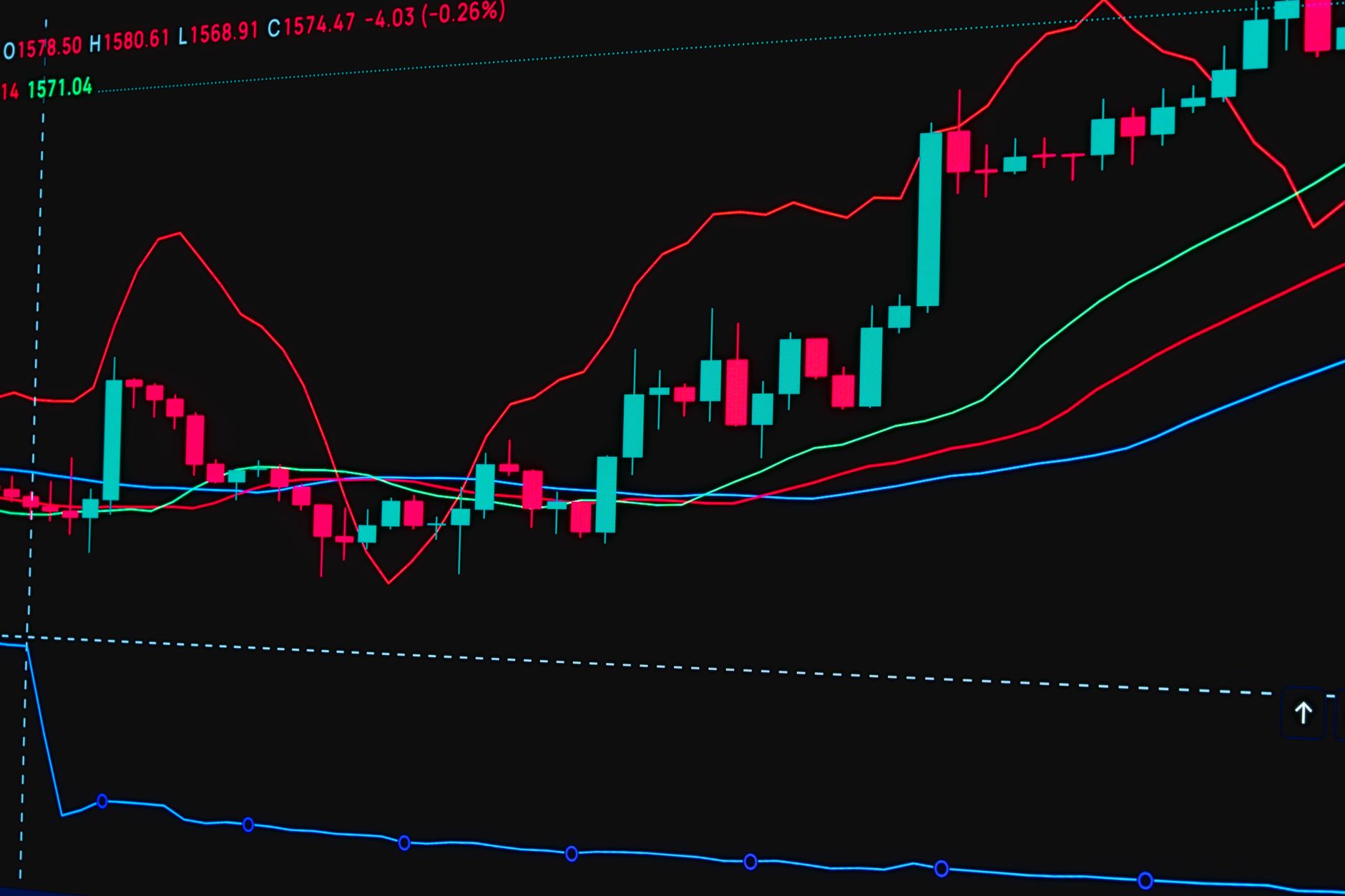
Stock recommendations for 18 August from MarketSmith India

Analyzing Short-Term Momentum in Bharat Forge and Other Stocks

How To Use Dollar-Cost Averaging In US Stocks: A 2026 Guide

As the U.S.-Iran war heats up again, these parts of the stock market and economy could be affected

HDFC Bank Q1 Results: Net profit rises 5% YoY to Rs 19,060 crore, NII up 7%
