Nifty 50 and Sensex Outlook for 18 August 2026
Analyze the Nifty 50 and Sensex movement for 18 August 2026. Understand how global interest rates and domestic inflation impact Indian equity markets.
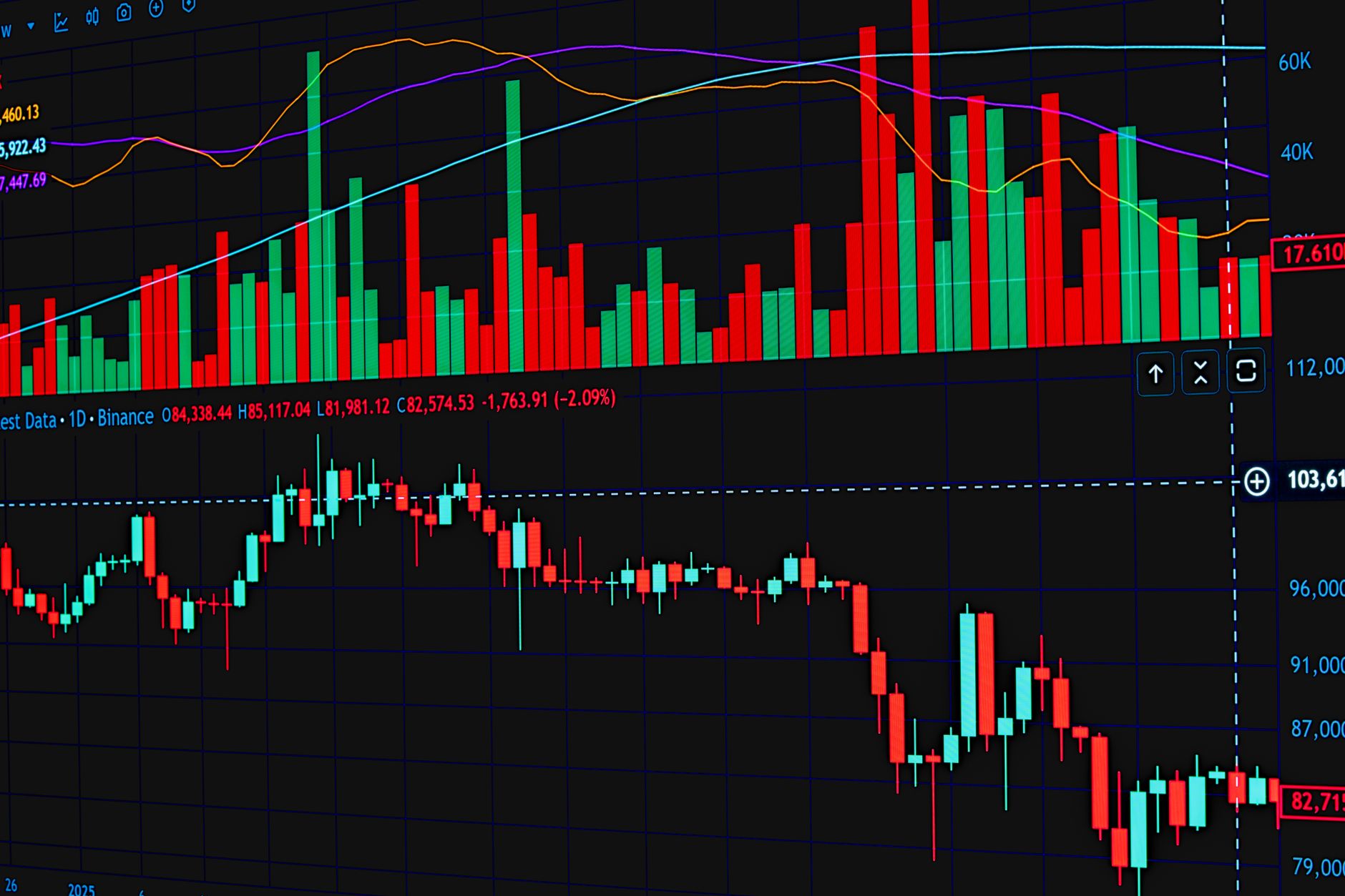
As the trading bell approaches for this Tuesday, 18 August 2026, investors across the country are closely monitoring the digital tickers. The Indian equity markets have been navigating a complex landscape defined by shifting global interest rate cycles and domestic monsoon-driven inflation dynamics. For those active in the Nifty 50 and Sensex, today's session promises to be a critical litmus test for the market's current momentum.
Whether you are a day trader looking for volatility or a long-term investor assessing your holdings, understanding the "why" behind market movement is more important than reacting to the "what." Today, we will dissect the technical setups, the macroeconomic backdrop, and the sectoral trends that are likely to define the trading session on the National Stock Exchange (NSE) and the Bombay Stock Exchange (BSE).
The Macroeconomic Backdrop: What is Driving the Nifty 50?
To understand how the Nifty 50 might behave today, we must look at the broader economic environment of August 2026. The Indian market does not operate in a vacuum; it is a confluence of domestic policy and global sentiment.
Domestic Inflation and RBI Stance
Throughout the first half of 2026, the Reserve Bank of India (RBI) has been in a delicate balancing act. With inflation showing signs of stabilization but remaining sensitive to food price volatility, the market is constantly trying to anticipate the RBI's next move regarding the Repo Rate.
If the market perceives that inflation is cooling, it generally creates a tailwind for equities, especially rate-sensitive sectors like Banking and Finance (BFSI). Conversely, any signal of a "hawkish" stance (keeping rates high for longer) can put pressure on high-growth stocks. Traders often use tools like the Downstox terminal to monitor real-time data feeds to see how these macro shifts translate into immediate price action.
Global Cues and the US Connection
Even as we focus on Indian indices, the performance of the US markets—specifically the NYSE and Nasdaq—remains a vital indicator. When US tech stocks rally, it often leads to a "risk-on" sentiment in the Indian IT sector. As an Indian investor, it is helpful to note that global liquidity flows are heavily influenced by the US Federal Reserve. If US yields drop, we often see more Foreign Institutional Investment (FII) inflow into the Indian markets, providing a cushion to the Nifty 50.
Analyzing Technical Setups: Nifty and Sensex
Technical analysis provides a roadmap of where the "smart money" is moving. On this 18 August 2026, traders are looking at key support and resistance levels to gauge the direction of the index.
Nifty 50: The Trendline Perspective
The Nifty 50, representing the heavyweight blue-chip companies, often dictates the direction of the broader market. When evaluating today's potential trade, analysts look at:
- Pivot Points: Identifying the levels where the index might face selling pressure (resistance) or find buyers (support).
- Moving Averages: The 50-day and 200-day Exponential Moving Averages (EMA) are crucial. If the Nifty is trading above these lines, the medium-term trend remains bullish.
- RSI (Relative Strength Index): If the RSI is approaching 70, the index might be "overbought," suggesting a potential cooling-off period or sideways movement.
Sensex: The Sensitivity Factor
The BSE Sensex, being a concentrated index of 30 major companies, can sometimes exhibit sharper movements than the Nifty 50. For an investor, watching the Sensex is useful for understanding the sentiment of the most established, large-cap corporations in India.
Practical Tip for Traders: Instead of trying to predict the exact direction, try to identify "zones." For example, instead of saying "Nifty will go to 25,000," it is more effective to say, "If Nifty holds the 24,800 support level, the bias remains upward."
Sectoral Rotation: Where is the Money Moving?
In any given trading session, capital rarely stays in one place. It rotates. On 18 August 2026, we are seeing a distinct pattern of rotation that investors should be aware of.
1. The Banking & Financial Services (BFSI) Sector
As the backbone of the Nifty 50, the banking sector's performance is heavily tied to credit growth and NPA (Non-Performing Asset) levels. When large private sector banks show strength, the entire index often follows.
2. Information Technology (IT)
The IT sector is a favorite for those looking to play the "US recovery" theme. Since Indian IT firms derive a massive portion of their revenue from North America, any positive news from the Nasdaq often triggers buying in companies like TCS or Infosys.
3. Consumption and FMCG
With the monsoon season influencing rural demand, the Fast-Moving Consumer Goods (FMCG) sector is a key area to watch. Investors often use a mutual fund screener to see if large institutional investors are increasing their exposure to consumer-oriented funds, which can be a signal of growing domestic consumption.
4. Auto and Metal
These are highly cyclical sectors. They react sharply to commodity prices (like steel and aluminum) and interest rate changes. If global metal prices are rising, the metal stocks in your portfolio might see a boost.
How to Evaluate Your Portfolio Amidst Volatility
Volatility is not your enemy; it is a feature of the market. The key is to ensure your portfolio is structured to withstand sudden shifts. Here is how you can evaluate your holdings today:
Use the "X-Ray" Approach
It is easy to own 10 different stocks that all belong to the same sector (e.g., 10 different banking stocks). This creates "concentration risk." You can use a portfolio X-Ray tool to see your true exposure. If 60% of your wealth is in one sector, a single regulatory change could impact your entire net worth.
Diversification vs. Over-Diversification
- Diversification: Spreading investments across different sectors (IT, Pharma, Banking, Auto) and asset classes (Equity, Gold, Debt).
- Over-Diversification: Holding too many stocks (e.g., 50 different stocks in a small portfolio) can lead to "closet indexing," where you mimic the market but pay higher management fees or transaction costs, making it hard to beat the Nifty 50.
The Role of Screening
When looking for new opportunities in 2026, don't just look at "rising stocks." Use a stock screener to look for fundamental strength. Look for:
- Debt-to-Equity Ratio: Is the company borrowing too much to fuel growth?
- ROE (Return on Equity): Is the company generating a healthy return on the shareholders' money?
- Operating Profit Margins: Are the companies becoming more efficient at making money?
Strategic Approaches for Different Investor Types
Market movement on 18 August 2026 will affect everyone differently. Your strategy should align with your risk appetite.
For the Long-Term Investor
The daily fluctuations of the Nifty 50 should ideally be "noise" for you. Your focus should be on the long-term trajectory of the Indian economy.
- Strategy: Systematic Investment Plans (SIPs). By investing a fixed amount regularly, you benefit from Rupee Cost Averaging, buying more units when prices are low and fewer when they are high.
For the Swing Trader
Swing traders look to capture moves that last a few days to a few weeks.
- Strategy: They often look for "mean reversion"—buying a high-quality stock when it has temporarily dropped to a major support level, or "momentum trading"—buying a stock that has just broken out of a long consolidation period with high volume.
For the Intraday Trader
These traders focus on the volatility within the 9:15 AM to 3:30 PM window.
- Strategy: They rely heavily on volume and price action. They look for "breakouts" above recent highs or "breakdowns" below recent lows. For them, the speed of execution and real-time data provided by a professional trading terminal is essential.
Conclusion: Staying Disciplined in 2026
As we navigate the market trends of 18 August 2026, the most important tool in any investor's arsenal is not a specific indicator or a "hot tip"—it is discipline.
The market is a machine that transfers money from the impatient to the patient. Whether the Nifty 50 ends the day in the green or the red, the goal remains the same: to make informed decisions based on data, economic reality, and a clear understanding of your own financial goals. Always remember that volatility is an opportunity for the prepared, but a risk for the unprepared.
Use the tools available to you—screeners, analyzers, and research—to build a view of the market, but never let emotion drive your trades.
This article is for information and education only. Downstox is not a SEBI-registered Research Analyst or Investment Adviser and this is not investment advice. Markets carry risk; consult a SEBI-registered adviser before investing.
For information and education only. This article is for information and education only. Downstox is not a SEBI-registered Research Analyst or Investment Adviser, and nothing here is investment advice or a recommendation to buy or sell any security. Any views or calls attributed to third parties are theirs, not Downstox's. Markets carry risk; consult a SEBI-registered adviser before investing.
Downstox Macro Desk
Macro & Policy Desk · RBI monetary policy · Indian fiscal policy · GST
RBI, Centre policy, FX, FII flows, global macro spillover into Indian markets.
View Downstox Macro Desk's profile →Get weekly market insights delivered free
Curated Indian market analysis, every Sunday morning. Written by traders, for traders.
Join 10,000+ Indian traders. No spam. Unsubscribe anytime.
Related reads
More in market analysis →
MCX in Top Mutual Fund Portfolios: Signal or Crowded Trade?

MAN Industries Expansion Plans: Saudi Revenue Outlook 2026
Swing Trading Outlook for Indian Equity Markets: August 2026
Can AI Predict Market Timing? Analyzing Recent Study Findings 2026